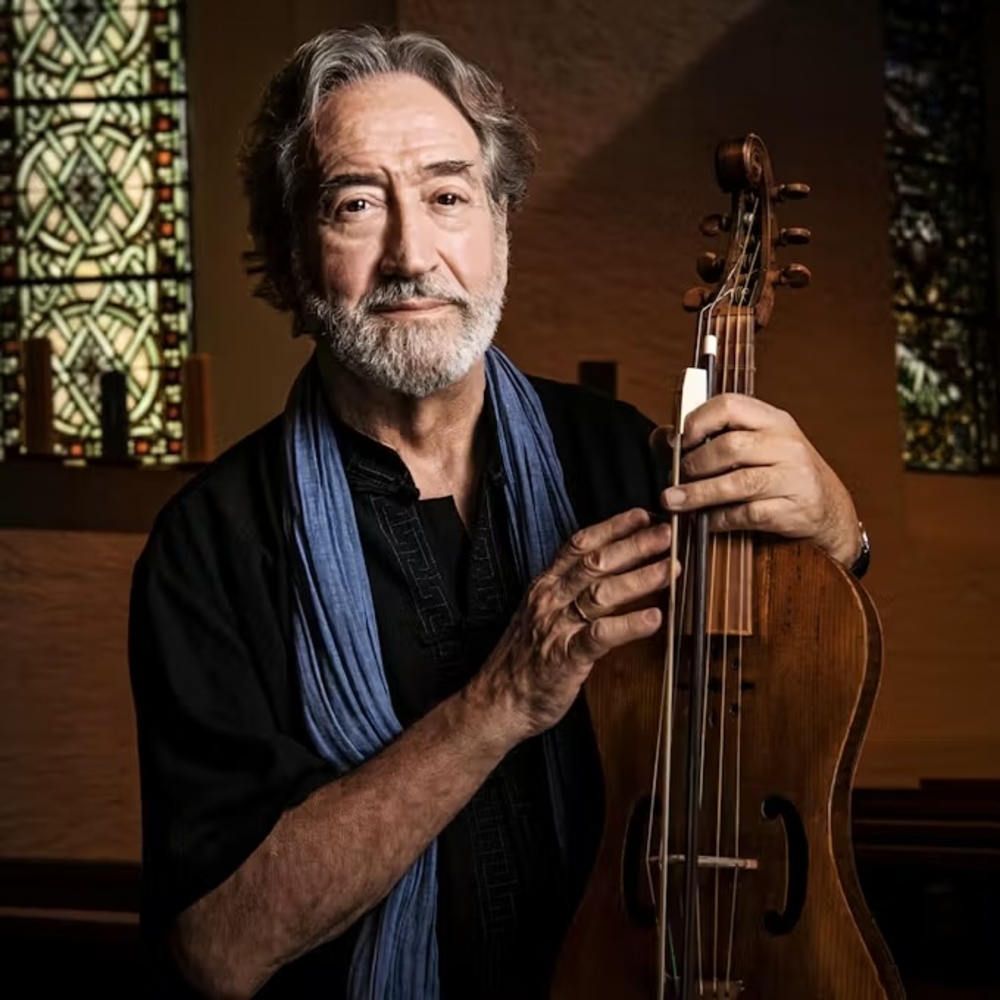
A leading light of the early-music movement, Jordi Savall broke through the stained-glass ceiling with the release of the art-house sensation Tous les matins du monde (1991), of which his haunting viola da gamba was the heart and soul. At 84, Savall continues his lifelong mission to explore sonorities of all ages for insight into cultural history more broadly. In concert programs, recordings, and lavishly illustrated companion scrapbooks informed by deep learning and clairvoyant imagination, he and his fellow adventurers have examined the Jerusalem of the Crusaders, the Spain of Don Quixote, the aura of Joan of Arc, and the showmanship of the Borgias. A decade ago, Savall’s project The Routes of Slavery 1444–1888 sought to honor the more than 25 million people enslaved by Western nations—from the unloading of the first cargo of 235 Africans in the port of Lagos by the Portuguese explorer Lançarote de Freitas to the passing of Brazil’s Lei Áurea or Golden Law, abolishing slavery. Revisiting the topic in An Ocean of Musics (note the purposeful plural), Savall augments his instrumental ensemble Hespèrion XXI and choir La Capella Reial de Catalunya with the Mexican Baroque-folk-fusion band Tembembe Ensamble Continuo, plus guests from Canada, Guinea, Guadeloupe, Mali, Brazil, Cuba, Haiti, and Venezuela. Godspeed! (Securing the necessary visas in the Age of ICE will be a nightmare.) The Carnegie Hall date is part of a tour with stops in Athens, GA (April 8), Worcester, MA (April 11), Boston (April 12), Hanover, NH (April 13), St. Paul (April 16), and Berkeley, CA (April 21). —Matthew Gurewitsch