What? No Charles Gounod? No Nino Rota? Earlier this season, the Orchestre de Paris regaled audiences with Romeo and Juliet as refracted through the prisms of Tchaikovsky, Prokofiev, and Leonard Bernstein. And now, the orchestra’s fire-eating music director Klaus Mäkelä crowns the series with the dramatic symphony of Hector Berlioz. The score bears a dedication to the “devil’s violinist” Niccolò Paganini, who years earlier rejected Harold in Italy. “Too many rests!,” Paganini fumed when he took his first look at the score. “I must be playing the whole time!” But when Paganini was dying, his son showed up at Berlioz’s door with a gift of 20,000 francs from his father, no strings attached. The money—amounting to twice Berlioz’s annual earnings scratching out his clairvoyant music criticism—could not have come at a better time; Berlioz was drowning in debt. But then there was the cover note, declaring Berlioz the sole heir of Beethoven. Lo and behold, Beethoven’s Ninth Symphony is as germane to Roméo et Juliette as Shakespeare’s tragedy. Friar Laurence—sung now by the majestic bass Jean Teitgen—ends the evening not with a Shakespearean homily but with a call for universal brotherhood straight out of the Beethoven playbook. —Matthew Gurewitsch
Arts Intel Report
Orchestre de Paris presents Hector Berlioz: Roméo et Juliette
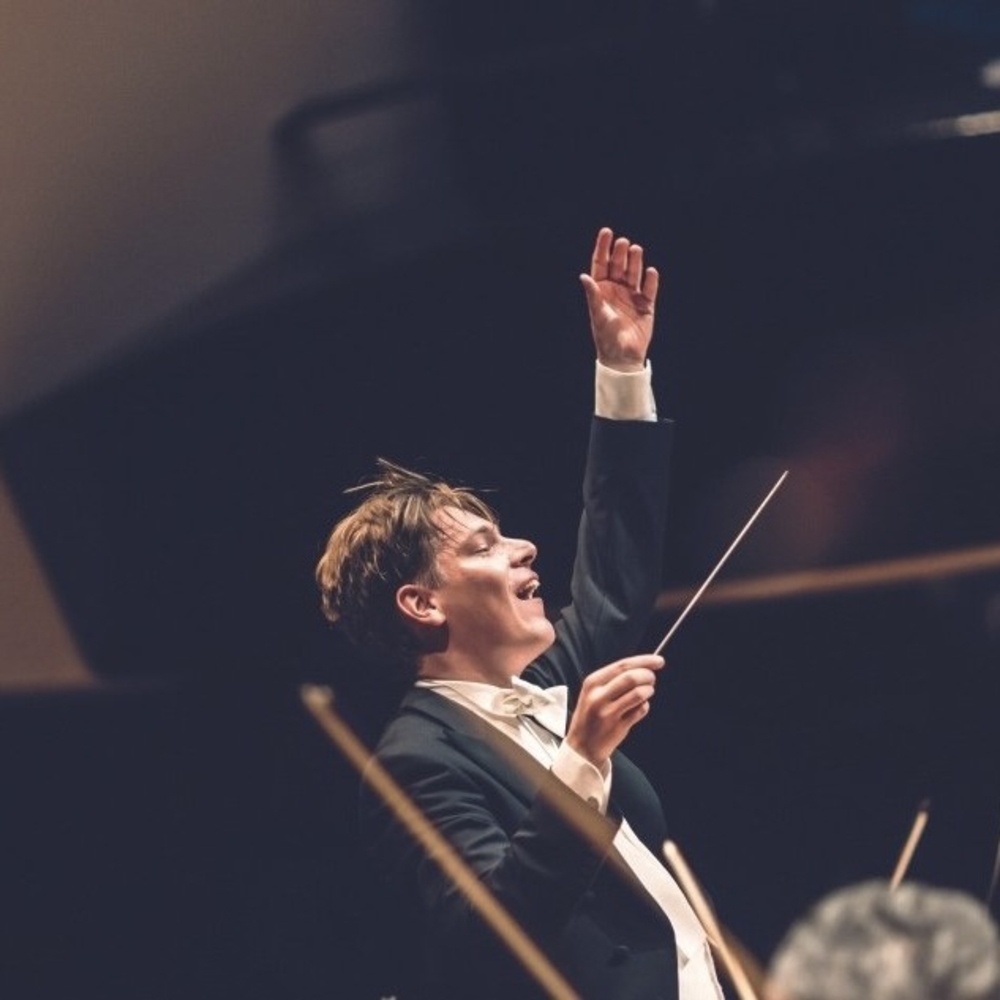
The conductor Klaus Mäkelä.