Claude Monet died in December 1926, exactly a century ago. To mark the anniversary, the Musée de l’Orangerie—home to the monumental Nymphéas panels that Monet gave to France after the First World War—is examining one of the great subjects of his career: Time. In the 1870s, Monet sought to capture a single moment—the light as it actually was. By the 1890s, he was returning to haystacks, poplars, and the Rouen Cathedral at different hours of the day. Finally came the Nymphéas, more than 250 studies of the water-lily pond at Giverny, which occupied him during the last decades of his life. Around 40 works from the Musée d’Orsay, the Musée Marmottan Monet, and international collections trace that evolution. —Elena Clavarino
Arts Intel Report
Monet: Peindre le Temps
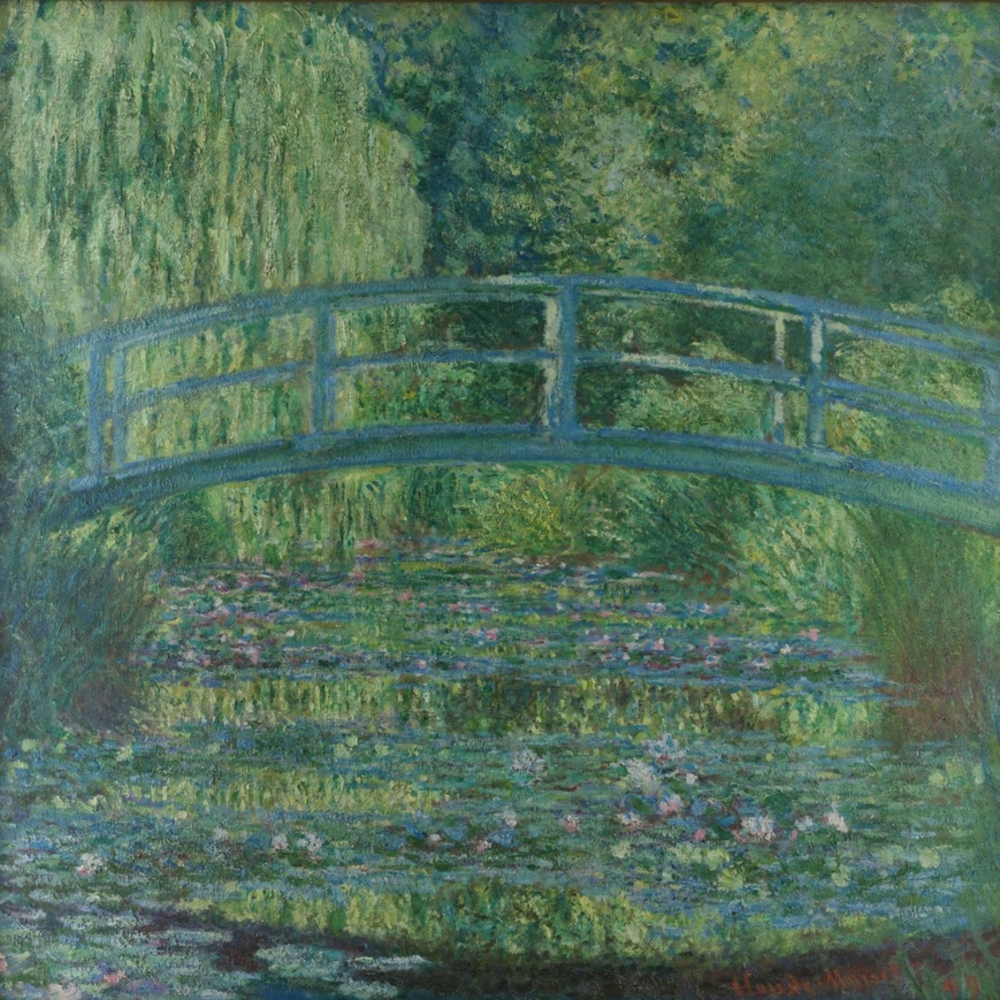
Claude Monet, The Water Lily Pond, Green Harmony, 1899.