For nearly a century, a circus stood at the foot of Montmartre. Opened in 1873 as the Cirque Fernando and later renamed the Cirque Medrano, it was a favorite haunt of the artists who lived nearby, particularly those gathered around the Bateau-Lavoir. Seurat, Toulouse-Lautrec, Degas, Picasso, Léger, Chagall, and Rouault all found inspiration under its big top, drawn to the spectacle of acrobats, clowns, and horses, the play of electric light on sequined costumes, and the thrill of bodies in motion. For some, the clown and the acrobat became symbols of the modern artist, living by their talent and at the mercy of an audience. The Musée de Montmartre explores the circus’s influence on modern art through paintings, sculptures, drawings, posters, and costumes, and includes Picasso’s bronze Le Fou (1905) and Chagall’s sketch for The Grand Circus. —Elena Clavarino
Arts Intel Report
The Circus: a Factory of Modern Art
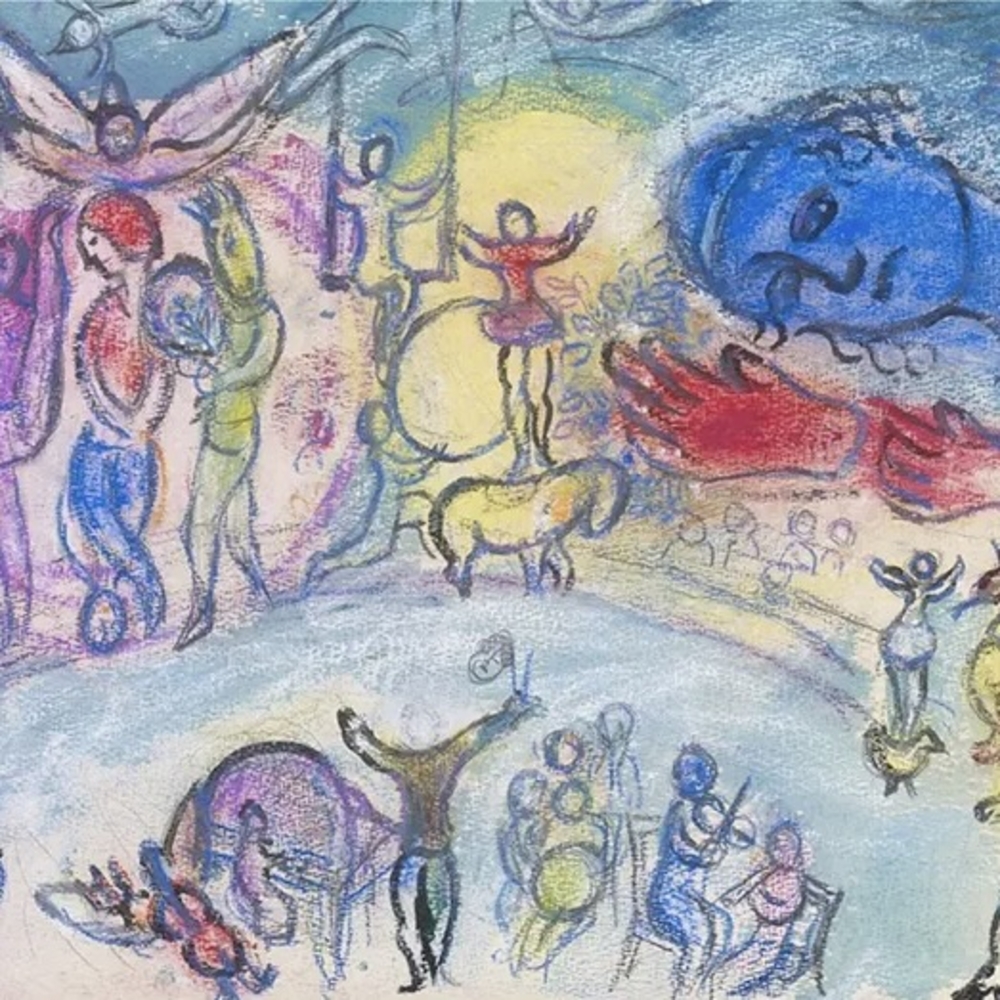
Marc Chagall, Esquisse pour Le Grand Cirque, c. 1956.