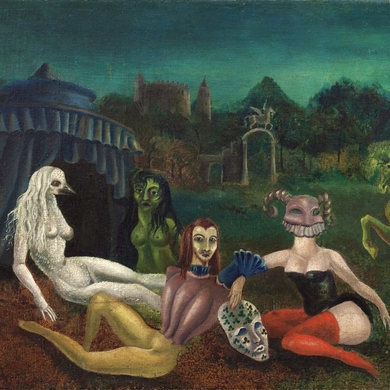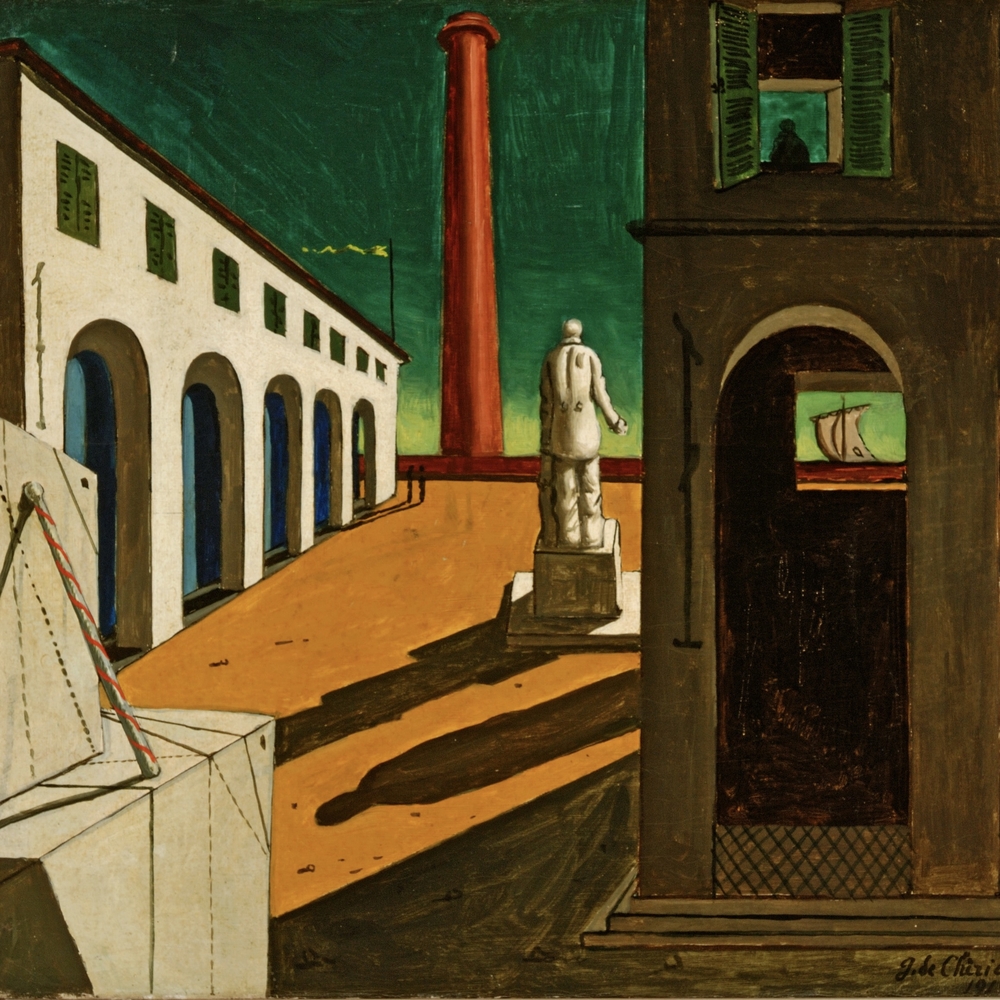
During the First World War, Giorgio de Chirico and his brother, Alberto Savinio, were stationed in Ferrara. There, at a military hospital, they met the artist Carlo Carrà, who would soon join them in developing the enigmatic style that came to be known as Metaphysical painting. Though Ferrara is little known outside Italy, the town is strikingly beautiful. Renaissance architecture surrounds forgotten piazzas—it’s a world suspended. Ferrara provided the perfect setting to pursue the “metaphysical,” a silent visual language shaped by stillness and dislocation. It also offered an antidote to Futurism, then taking hold in Italy’s cities and focusing on machines, speed, and noise—a direction Carrà himself began to abandon after arriving in Ferrara. This exhibition—which is spread between the Palazzo Reale, the Museo del Novecento, Gallerie d’Italia, and Palazzo Citterio—presents 400 works rooted in the Metaphysical painting movement and its global legacy. —Elena Clavarino