“My sculpture is not fixed and finished,” the German artist Joseph Beuys once said. “Processes continue in most of them: chemical reactions, fermentations, colour changes, decay, drying up. Everything is in a state of change.” Born in 1921 in Krefeld, Germany, Beuys opted for a career in medicine but was forced to fight on the Western Front during W.W. II, where he was taken prisoner by the British. After his release from an internment camp, Beuys turned to sculpture, believing his works could spur tangible political change (his biographer would call him the “ideal antagonist” to Andy Warhol). Beuys’s Bathtub, one of his most influential works, is the focus of this exhibition Thaddaeus Ropac. It explores his idea of “revolutionary warmth,” which suggests that temperature enables transformation. These themes are presented through a number of sculptures and drawings, illuminating Beuys’s legacy of social sculpture. —Maggie Turner
Arts Intel Report
Joseph Beuys: Bathtub for a Heroine
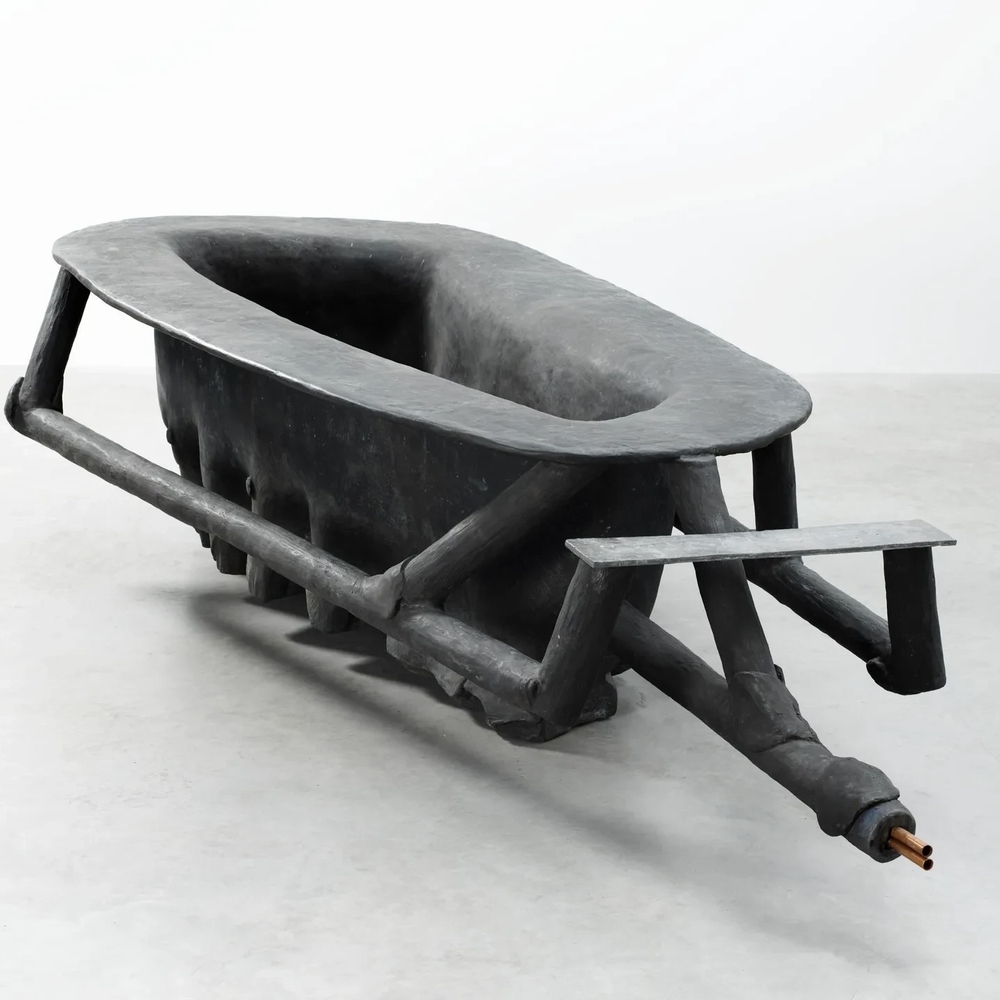
Joseph Beuys, Badewanne (Bathtub), 1961–87.