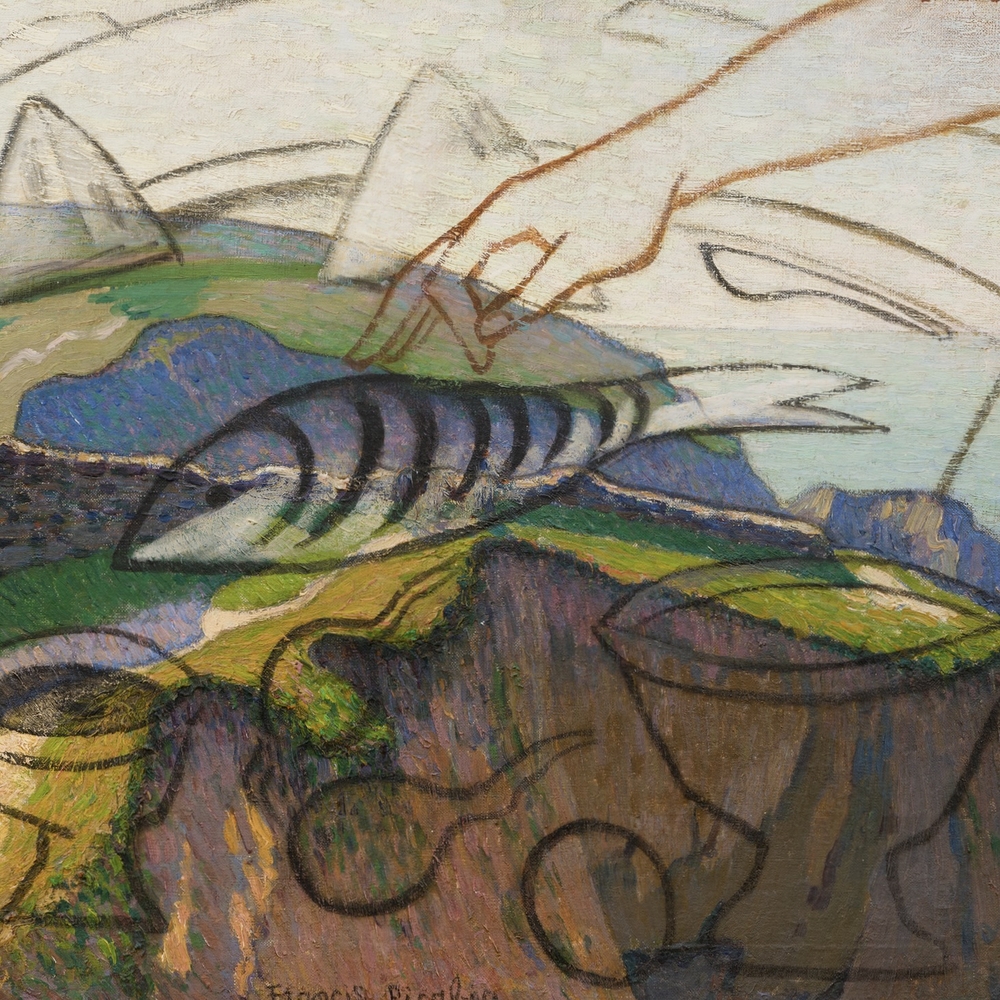
Francis Picabia worked in state of continuous creative renewal. The artistic chameleon cut a swath through different movements—Impressionism, Fauvism, Cubism—each giving way to new exploration. Marcel Duchamp, Picabia’s close friend and collaborator, described his oeuvre as “a kaleidoscopic series of art experiences.” In 1915, Picabia flew to New York to partake in anti-art Dadaist manifestations alongside Duchamp and Man Ray. Five years later, he decried the movement for not being “new,” left the avant-garde, and returned to figurative painting. In Paris, Picabia painted photo-based portraits and nudes, embracing what his former peers denounced. Over the course of five decades, his practice transcended barriers between abstraction and realism. Hauser & Wirth, in London, pays homage to Picabia’s relentless reinvention, highlighting stylistic shifts that began with his Impressionist landscapes and ended with textural abstract paintings. —Maggie Turner