“Painting,” Rembrandt once said, “is the grandchild of nature.” He proved his point in landscapes, genre scenes, animal studies, and Biblical narratives, as well as in his portraits, which many consider his greatest creative triumphs, spirit and emotion sculpted into his subjects’ faces through subtle chiaroscuro. Rembrandt lived in a time when the world was changing fast: the Dutch Republic was newly prosperous, art was shifting from church and court toward the home, and painters like Frans Hals and Judith Leyster were redefining realism through looseness and immediacy. This exhibition at the Norton presents 75 works from the splendid collection of Thomas Kaplan, who holds nearly as many Rembrandts as the Rijksmuseum. Alongside Rembrandt’s own paintings are works by his students, including Gerrit Dou and Carel Fabritius. Johannes Vermeer’s Young Woman Seated at a Virginal is also among the treasures. —Elena Clavarino
Arts Intel Report
Art and Life in Rembrandt's Time: Masterpieces from the Leiden Collection
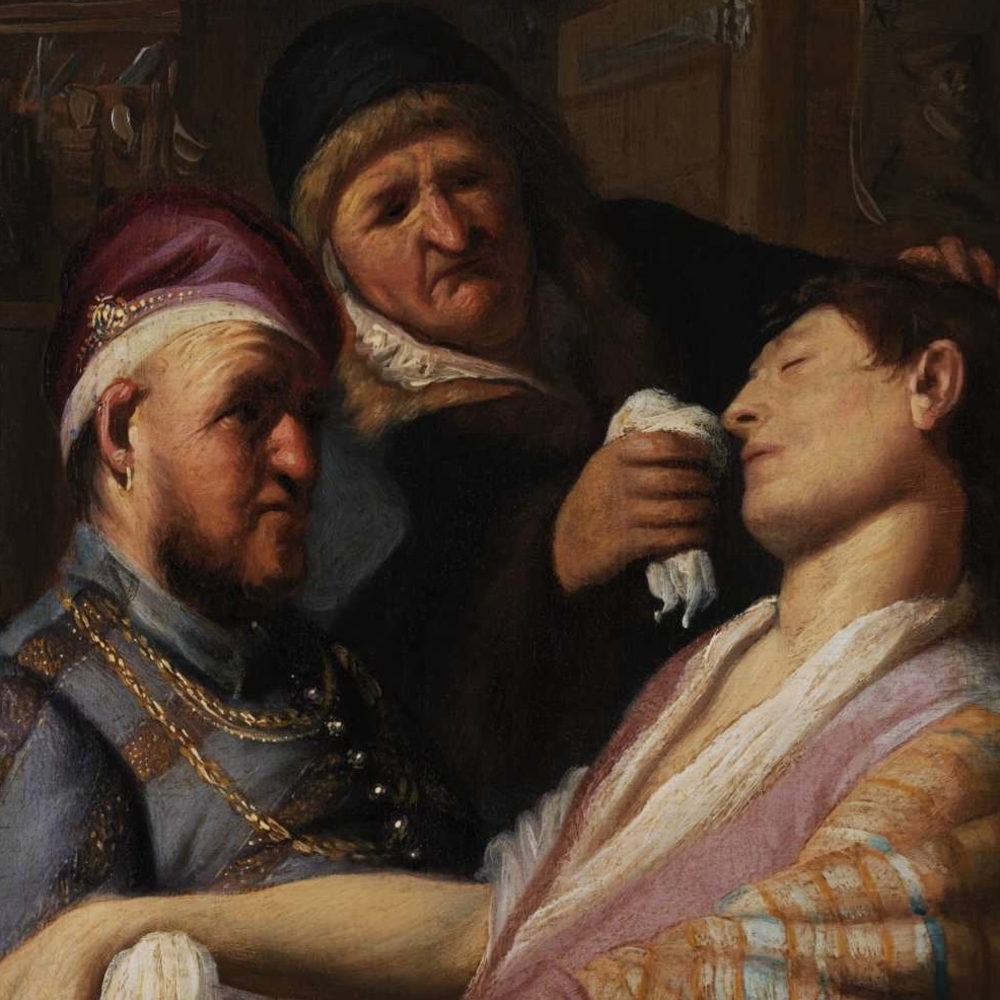
Rembrandt van Rijn, Unconscious Patient (Allegory of Smell), c. 1624–25.