Japanese metalworking has been practiced for over 2,000 years, but it was during the Edo period that the swordsmiths and armorers who served the samurai class elevated such work to a recognized art form. With the Meiji Restoration of 1868, the samurai class dissolved and the public was banned from wearing swords. Metalworkers, who lost their traditional patrons overnight, turned their skills toward decorative and sculptural objects of extraordinary technical sophistication—pieces that were showcased at national exhibitions and international world’s fairs. The Dallas Museum of Art traces this arc across more than 90 works spanning five centuries, from arms and armor through imperial court commissions to the cloisonné enameling and monumental bronze sculpture of the Meiji period. Among the treasures is an incense burner that once belonged to Emperor Meiji himself. —Elena Clavarino
Arts Intel Report
Samurai to the Imperial Court: Japanese Metalwork
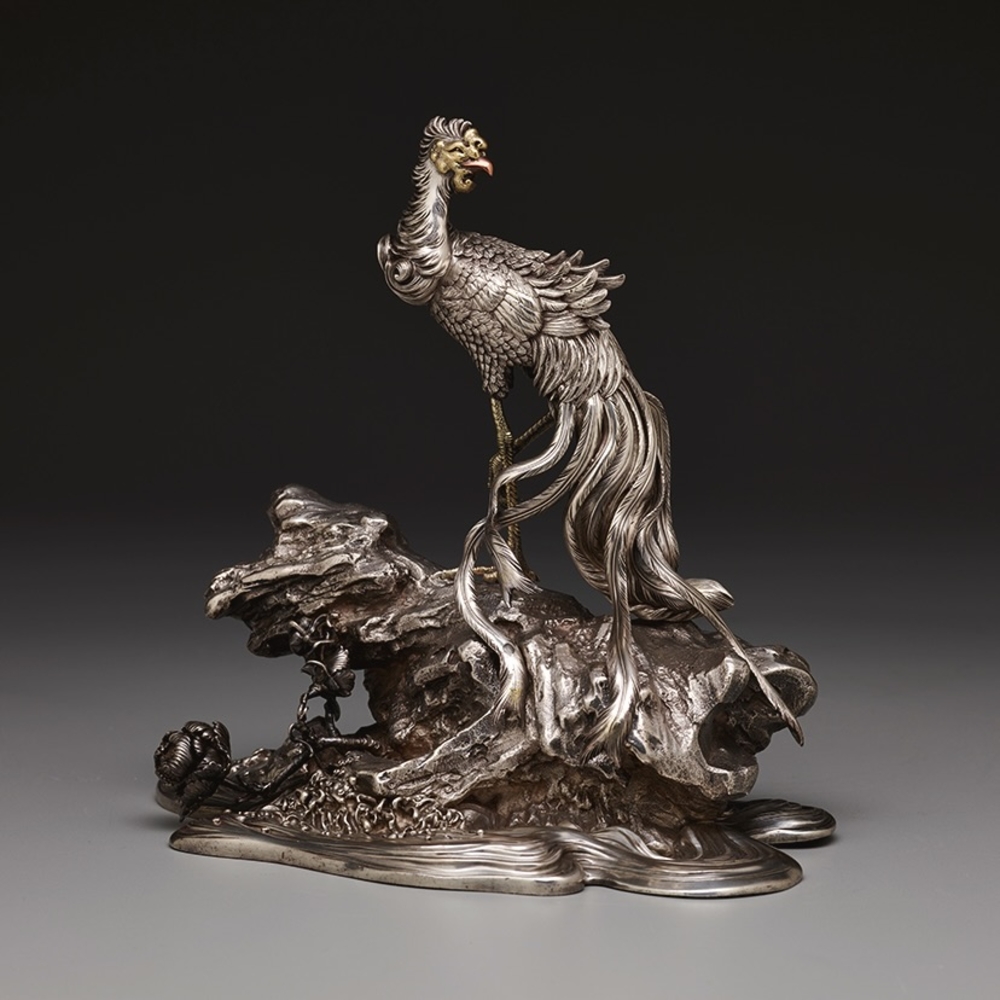
Hirayama Kantei, Phoenix, c. 1900.