When she was a little girl in North Carolina, on the cusp of the 20th century, Minnie Evans began to have strange dreams. The visions were so vivid and overpowering that they often kept her awake all night. At 13, Evans stopped going to school. Opportunities for Black women were limited back then, and in 1916 she found work as a domestic servant, later becoming a gatekeeper at Airlie Gardens—a job she held until 1974. In 1935, after Evans made two pen-and-ink drawings, she began to draw in earnest. Soon after, she heard a voice that said, “Why don’t you draw or die?” She spent the rest of her life translating those voices into surreal, psychedelic visions on paper—something like Shaker “Spirit Drawings” but more colorful and baroque. In 1975, Evans became one of the first Black artists to have a solo show at the Whitney Museum. She died in 1987, at 95. This exhibition presents works covering 40 years of creativity. —Elena Clavarino
Arts Intel Report
The Lost World: The Art of Minnie Evans
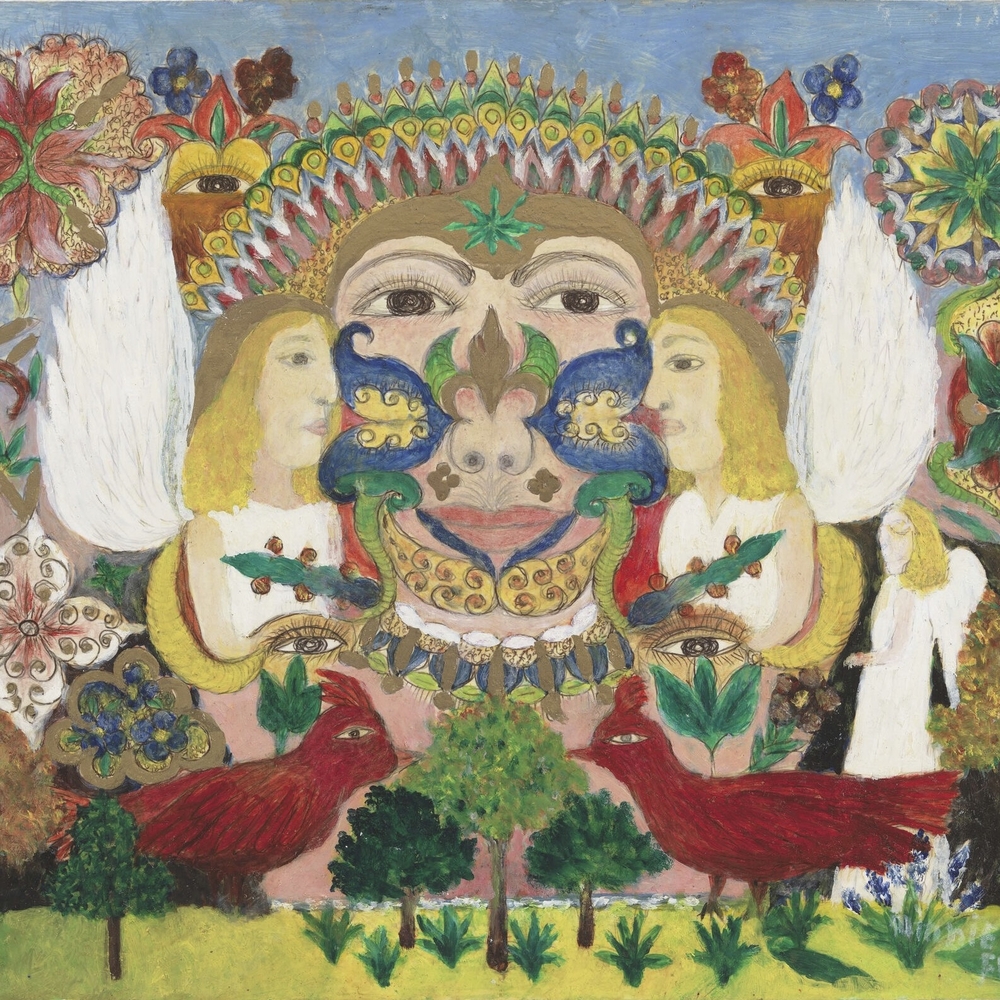
Minnie Evans, Untitled (Face with Crown and Angels), 1968.