The artist Paul Thek had a lifelong obsession with disappearance and often destroyed many of his works. In the 1950s, early in his career, he moved to Miami where he became part of community that included the photographer Peter Hujar and playwright Tennessee Williams. A decade later, Thek returned to New York City, but in 1967 he vanished from the downtown art scene he helped create—a Fulbright fellowship had taken him to the remote Italian island of Ponza. He returned yet again in 1976. Thek’s works that re-created human body parts, known as “meat pieces,” challenged the dominance of Pop art and Minimalism and made him a mythic figure in the art world. In one of his notebooks, Thek wrote that he had a “dream of vanishing.” This exhibition at Pace, named for that phrase, examines the full arc of his career, from the mature canvases he made in the 1960s to his “bad paintings” of the 1980s. Thek died from complications of AIDS in 1988. His friend Susan Sontag dedicated not one but two books to him. —Maggie Turner
Arts Intel Report
Paul Thek: Dream of Vanishing
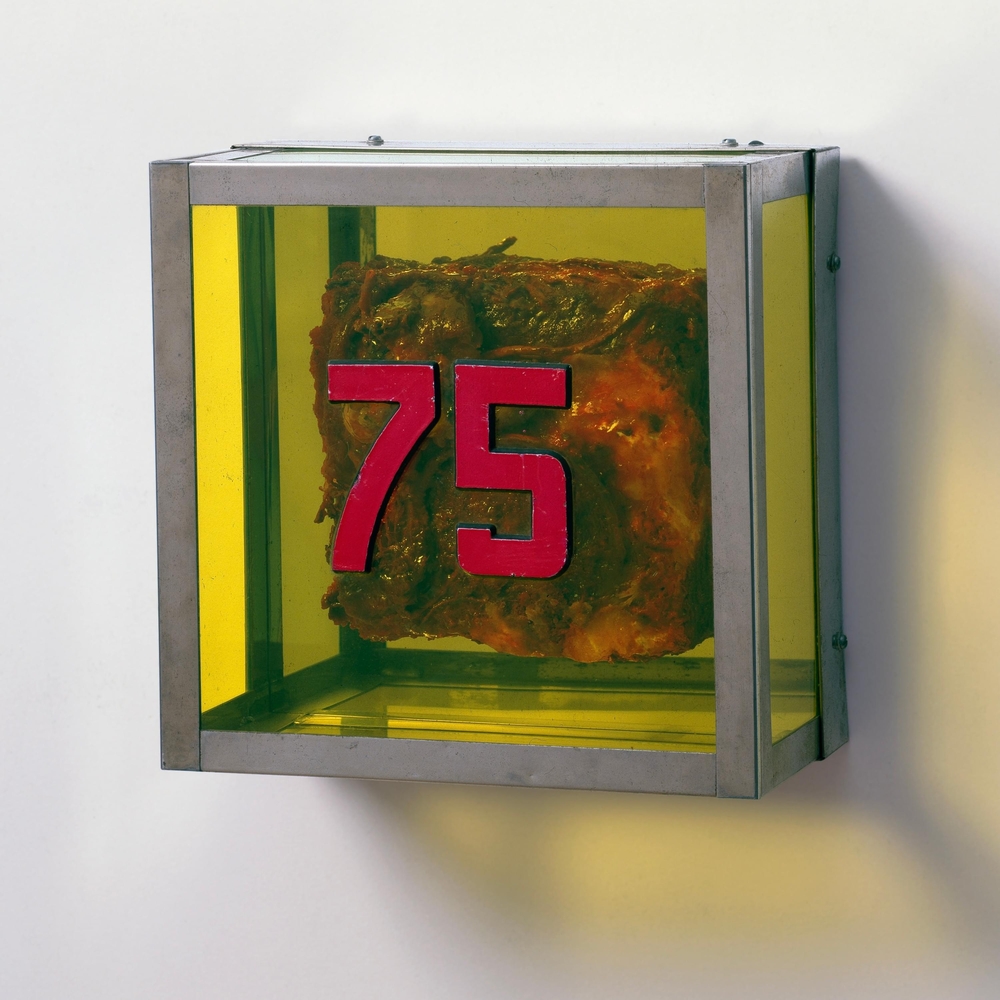
Paul Thek, Untitled (75), 1964.