Franz Marc was born in Munich in 1880. His father was a painter and his mother a devout Calvinist. Marc was interested in theology, but at 19 he looked to art and began study at Munich’s Academy of Fine Arts. He also made trips to Paris in 1903 and 1907, studying art in that crucible of innovation and finding particular inspiration in Van Gogh. By 1911, a profound sense of color had emerged in Marc’s paintings, and that year he founded the influential modernist journal Der Blaue Reiter (The Blue Rider). A movement flourished around it—Wassily Kandinsky was a founding member—but it all ended in 1914 when the Great War began. Marc, as brilliant as Kandinsky, was killed in that war, in 1916, while fighting for Germany. Though he died for his country, the Nazis banned his work in their 1937 attack on so-called “degenerate” art. Marc’s paintings are powerfully enchanted and strangely moving, especially his depictions of non-human creatures. Marc’s Fate of the Animals, painted in 1913, takes its place alongside another 1913 prophecy of destruction: Stravinsky’s Le Sacre du printemps. This show in Düsseldorf presents over 120 painting and works on paper by Marc. —Laura Jacobs
Arts Intel Report
Franz Marc: The Quest for a Better World
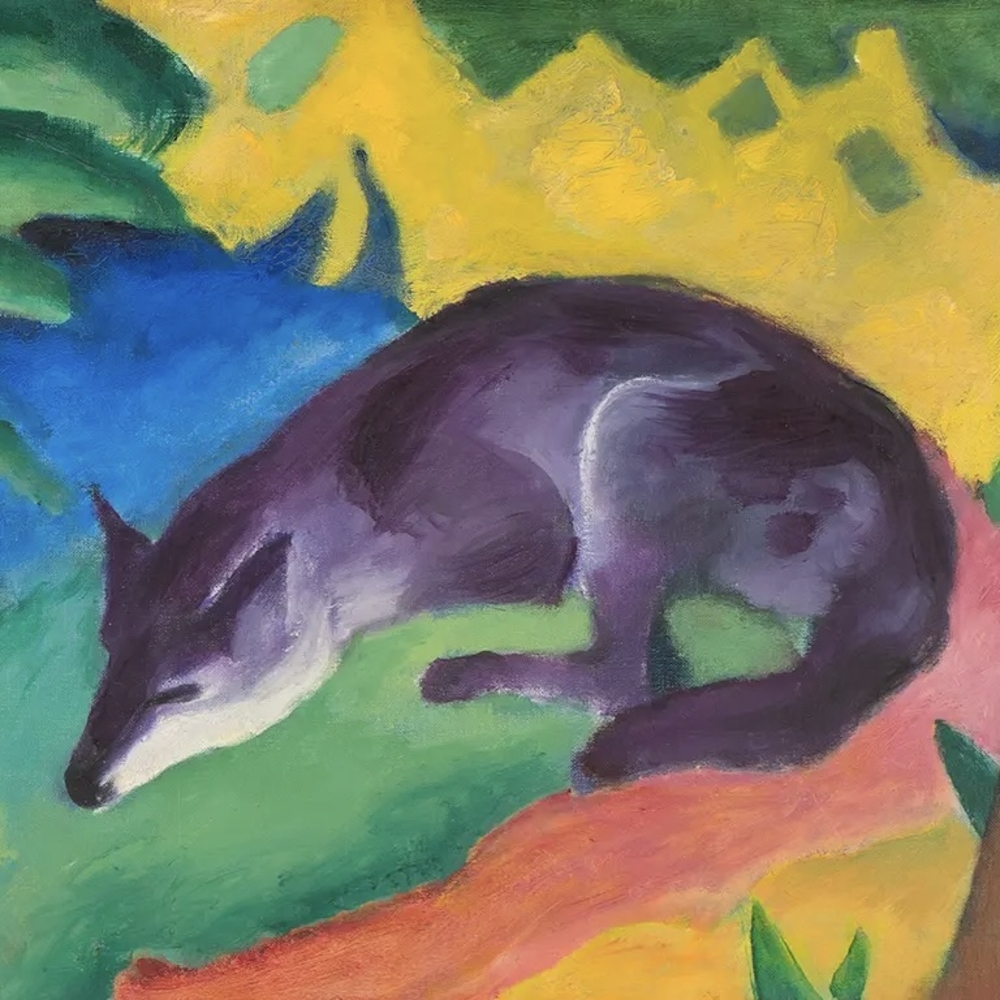
Franz Marc, Fuchs, 1911.