When Ghana gained independence in 1957, Kwame Nkrumah, the country’s first president, commissioned a new capital. When Senegal became independent in 1960, its first president, Léopold Sédar Senghor, ordered new universities, cultural centers, and government buildings. Across West Africa, from the late 1950s through the early 1980s, the leaders of newly independent nations understood that architecture was politics—that to build was to declare, in concrete and steel, that colonialism was over. Presenting the first major exhibition to examine this period, MoMA looks at seven countries—Benin, Cameroon, Côte d’Ivoire, Ghana, Nigeria, Senegal, Togo—and 450 objects: drawings, models, and archival photographs, the vast majority never previously exhibited. The result is deep dive into a largely unknown chapter in the history of modernism. —Elena Clavarino
Arts Intel Report
Architects of Liberation: Modernism in Western Africa
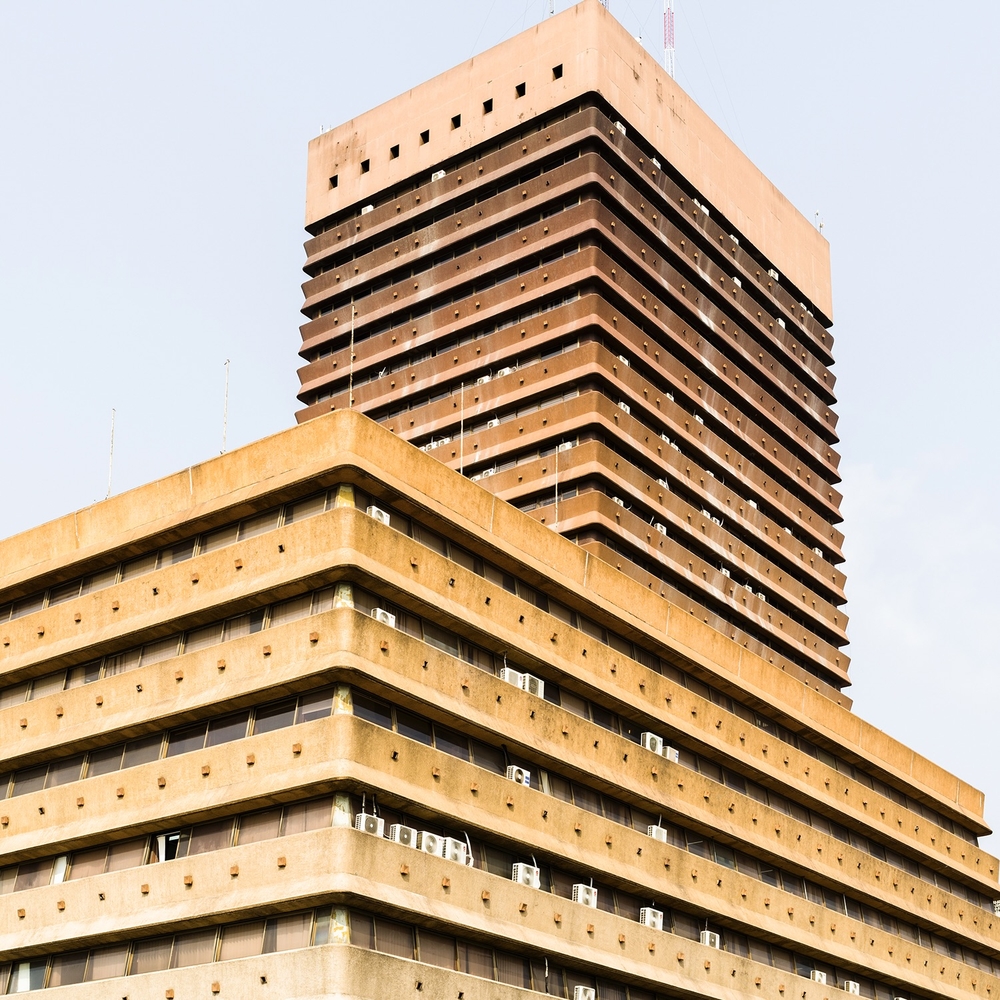
Alpha 2000 (Société Ivoirienne de Banque), Abidjan, Côte d’Ivoire, 1974–76.