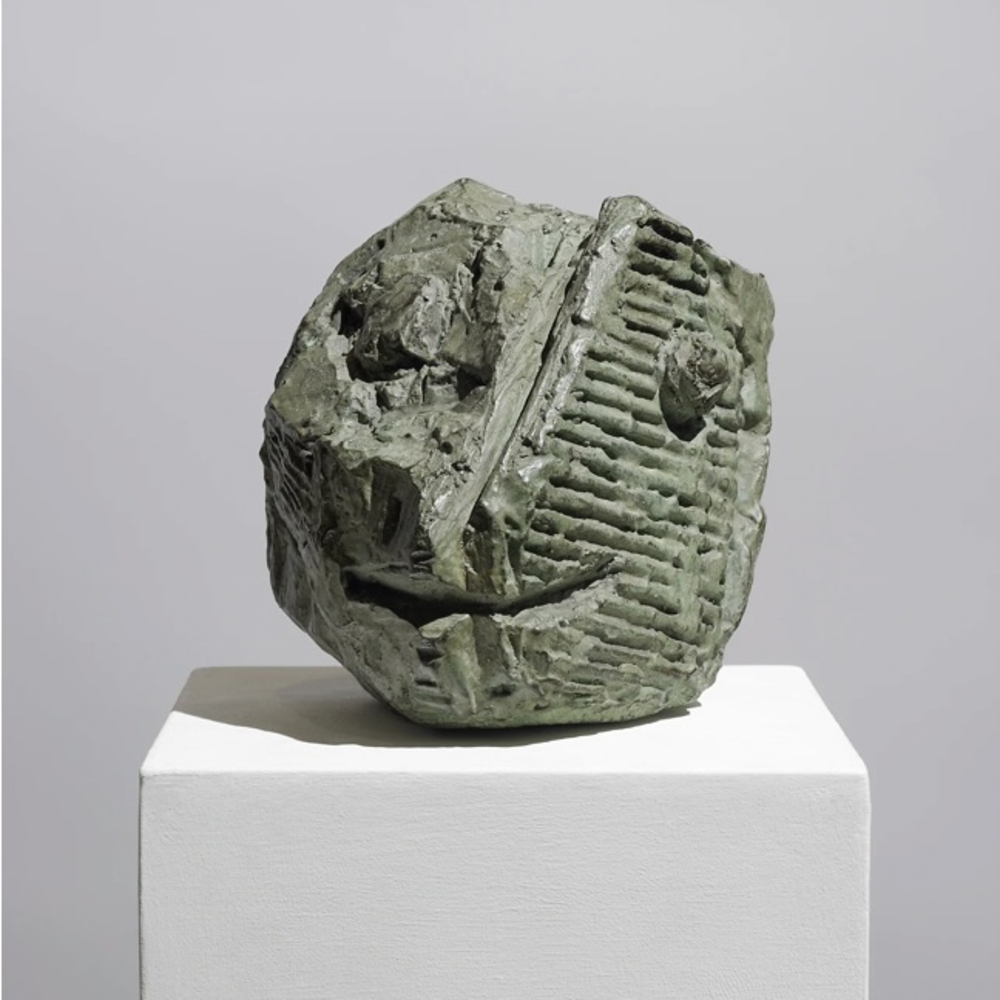
“The sculpture that I like is sculpture that was very very simple and not ornate,” said William Turnbull (1922–2012), “the opposite I suppose of Baroque.” The art historian Tim Marlow put it another way, recalling that Turnbull, when discussing his sculpture, said he wanted “to take it out of time.” Born in Dundee, Scotland, in 1922, Turnbull was working his way into art when, in 1941, he was enlisted in the RAF. When the war ended, he enrolled in London’s Slade School of Fine Art to study painting. Disagreeing with the department’s stress on neo-Romanticism, he switched to sculpture, embraced modernism, then left for Paris in 1948. There he learned from Brancusi and Giacometti. Later, in New York, it was the Abstract Expressionists. The horse, the standing figure, and the human head are Turnbull motifs. Physicality and mystery meet in his sculptures, which resonate with stoic, ageless energy. This exhibition at Karma focuses on Turnbull’s important early output, including paintings and works on paper. —Laura Jacobs