When the modern dancer Martha Graham (1894–1991) was young, her father, a doctor, put a drop of water on a slide and asked her what she saw. “Pure water,” she answered. He then put the slide under a microscope and had her look. “There are wiggles in it,” Martha exclaimed. Dr. Graham said, “Yes, it is impure. Just remember this all of your life, Martha. You must look for the truth.” And that is what she did, in dances that dig down into those caverns measureless to man—the psyche and the soul. “Movement never lies,” Graham always said, again quoting her father. No surprise, then, that actors clamored to her classes, stars such as Bette Davis, Kirk Douglas, Gregory Peck, Joanne Woodward, Paul Newman, and Liza Minnelli. They wanted to learn how to use their bodies to tell the truth of a character. Even before Antony Tudor was creating his psychological ballets—Pillar of Fire (1942), Undertow (1945)—Graham had planted her flag in the subconscious. She read Jung and Freud, and counted Joseph Cambell, a scholar of archetypes and the unconscious, as a close friend. This exhibition looks at Graham’s entire career through the prism of her explorations in psychology. —Laura Jacobs
Arts Intel Report
Martha Graham: The Mother of Psychological Dance
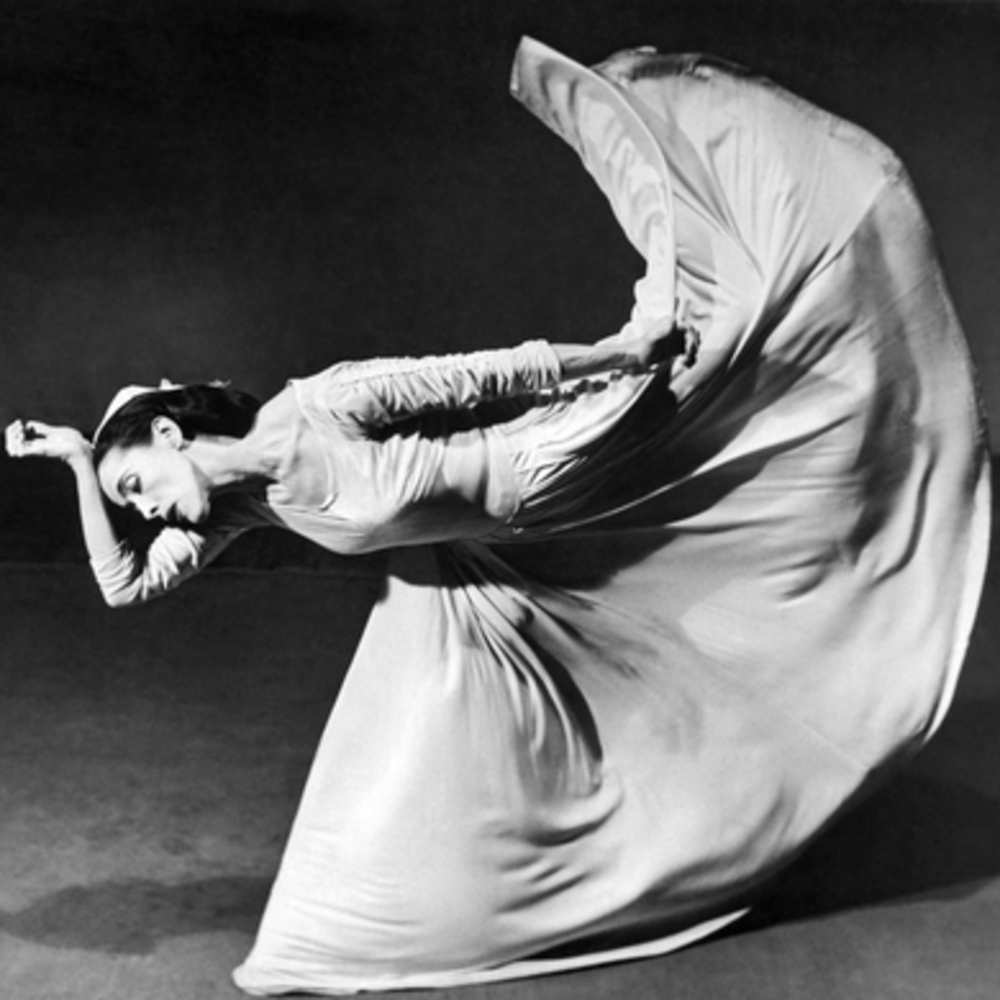
Martha Graham in a still from Letter to the World, New York, 1945.