For the ceramist Shimizu Uichi (1926–2004), glaze was not just a decoration but a field of artistic inquiry and expression. His pieces feature iron blacks, dazzling whites, and celadon surfaces webbed with fine, deliberate cracks. This summer, Carpenters Workshop Gallery, in collaboration with deBiousse&West, presents “The Language of Glaze: Shimizu Uichi at 100,” marking the centenary of one of Japan’s most influential ceramic artists. Shimizu was born in Gojōzaka, the Kyoto quarter known for ceramic production in Japan. He apprenticed under Ishiguro Munemaro, who had revived the techniques of Song dynasty and earlier Chinese ceramics. In 1970, Shimizu left the city for rural Shiga and built a noborigama (climbing kiln) at the foot of Mount Hōrai. There he developed his signature craquelure celadon-glazed works, oil-spot tenmoku, and icchin, the slip-trailing technique long associated with Kyoto. In 1985 he was named a Living National Treasure for his command of tetsu-yū (iron glaze), drawing remarkable tonal depth out of small shifts in kiln temperature and atmosphere. In this exhibition, 40 pieces are on view. Most have never been exhibited, having remained with the artist’s family in the workshop where they were made. His traditional pots are shown alongside tools and small clay test baskets that he used to see how a glaze would run at every angle. —Clara Scholl
Arts Intel Report
Shimizu Uichi: The Language of Glaze
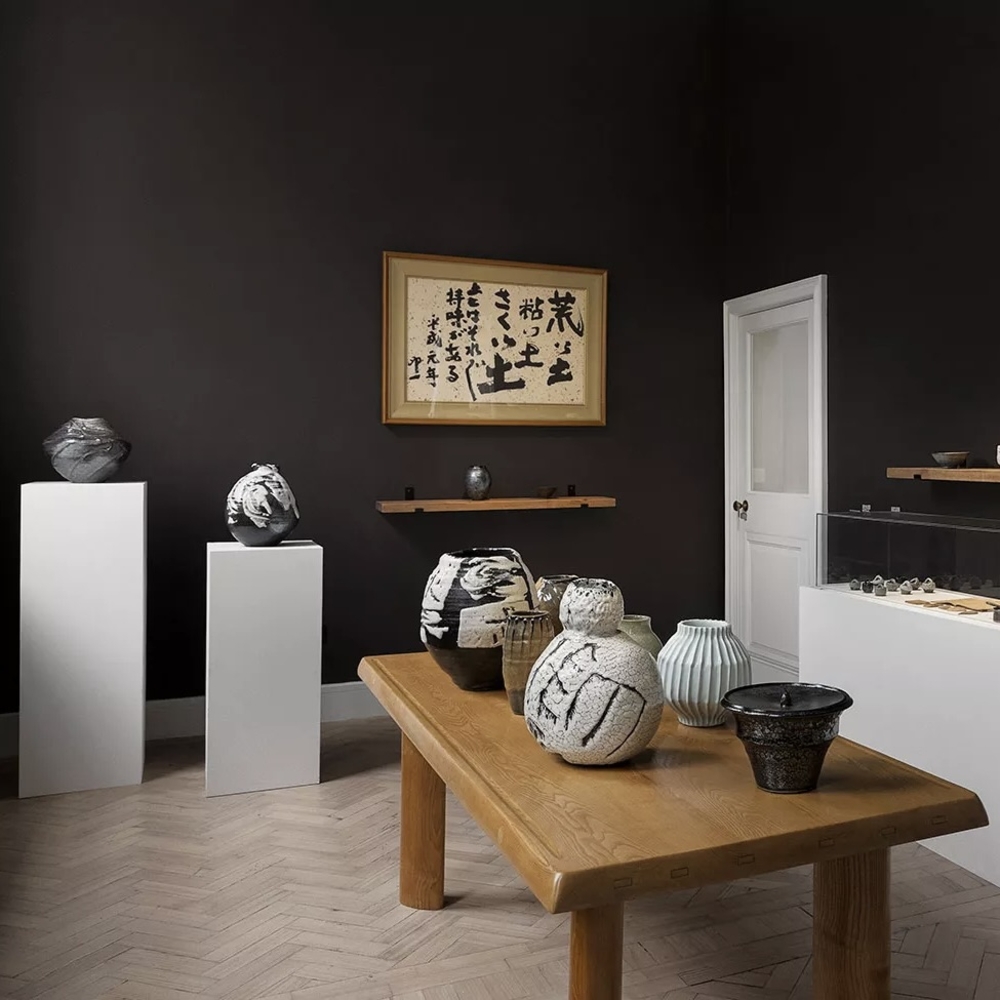
An exhibition view of “The Language of Glaze: Shimizu Uichi at 100.”