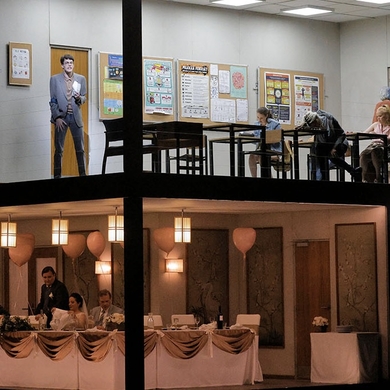
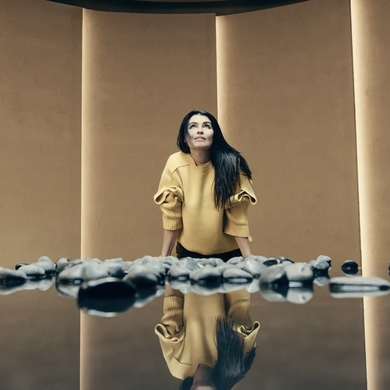
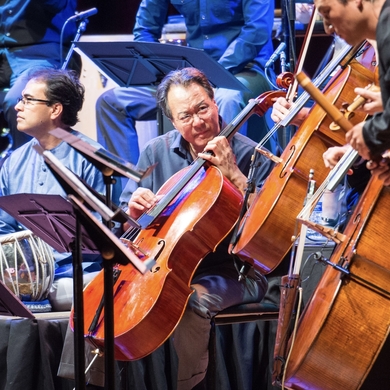
Paris in the decade straddling the year 1840! For a time-traveler whose jam is opera, what a destination that would be. Rossini, it’s true, had bowed out with Guillaume Tell in 1829. But Auber was riding high in the wake of Fra Diavolo (1930), Halévy grabbed the brass ring with La Juive (1835), and the stupendous Meyerbeer hit a peak with Les Huguenots (1836). Poor Berlioz sort of bombed with Benvenuto Cellini in 1838—unjustly, as we know in hindsight. And then there was Donizetti, more or less steadily in residence from 1838 to 1845, recycling established hits and ginning up new ones, tragic as well as comic, for grander as well as more populist theaters. His Frenchified Lucie de Lammermoor improved on the Italian original with weightier and more colorful instrumentals in the dialogue sequences. In addition, he supplied a new aria for the heroine’s sonorous father-confessor as well as the ballet demanded by French audiences. Best of all, in the blood-soaked bride’s meandering, mesmerizing Mad Scene he replaced the merely ethereal flute with the spooky glass harmonica. In a rare French revival, the exquisite Sabine Deviehle is Lucie, secretly married to her family’s hereditary enemy Edgar (Léo Vermot-Desroches) but coerced into an expedient second marriage by her brother Henri (Étienne Dupuis), who is skating on thin political ice. Lucie signs on the dotted line, and her world goes smash (cue that time-stopping sextet). The offstage wedding night, of course, is much, much worse, as we discover when she returns, communing with that glass harmonica. —Matthew Gurewitsch