The artist Gustav Klimt (1862–1918) was a solitary man who spent most of his time at home, where he could usually be found dressed in a robe and sandals. At the end of the century he helped found the Vienna Secession, which championed the unconventional. Klimt’s glittering “Golden Phase” began in the 1900s, when he added gold leaf and Byzantine mosaic patterns to his portraits of women (famous among these works is Adele Bloch-Bauer I, from 1907). A later work by Klimt, Portrait of a Lady (1916–17), does not employ gold, but sets a dark-haired woman in a green background, her cheeks blushing and her kimono colorful. This painting was stolen from Piacenza’s modern-art gallery in 1997, after which a forgery appeared, which may have been used in a swap. The real painting was found by a gardener in 2019, hidden in a recess in one of the gallery’s exterior walls. The portrait is part of an exhibition that celebrates Klimt and his era, and includes works by Italian artists he inspired. —Elena Clavarino
Arts Intel Report
Klimt: The Man, the Artist, and his World
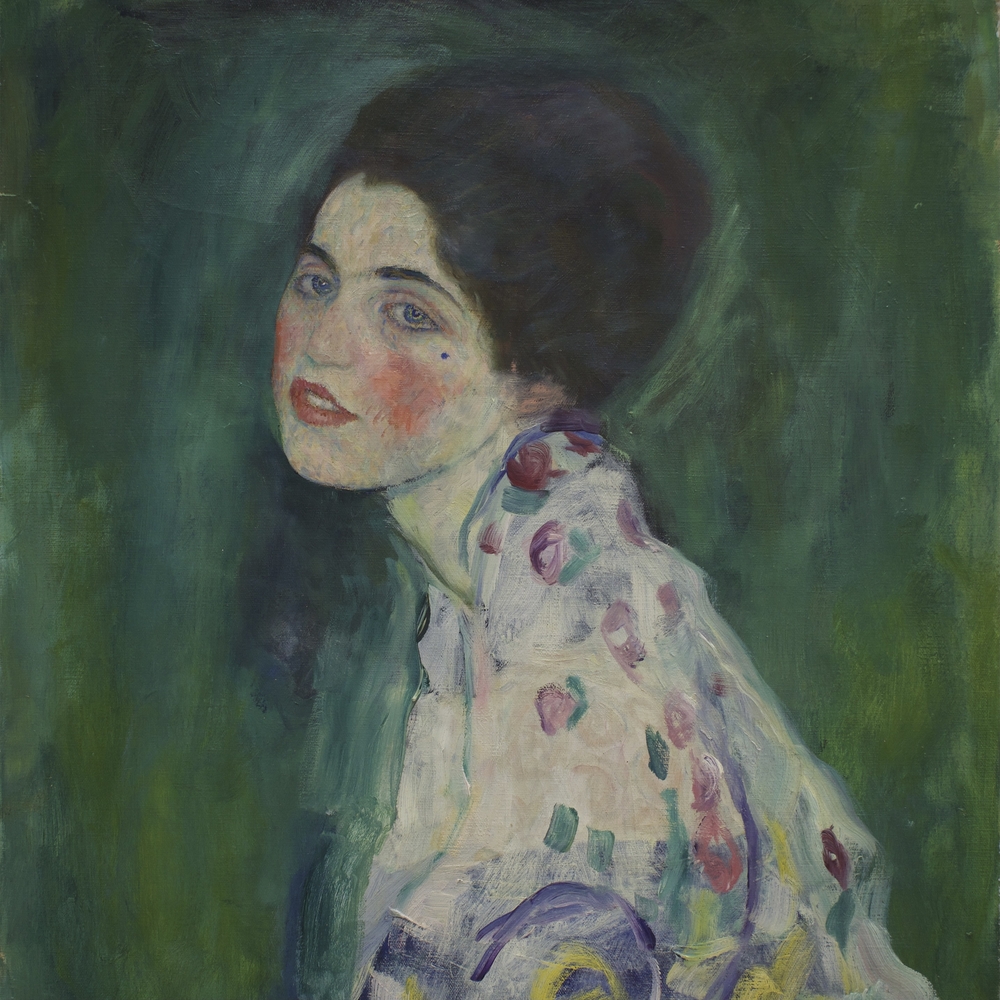
Gustav Klimt, Portrait of a Lady, 1916–17.