One could argue that La Belle Époque (the beautiful era) was an artistic peak—if not the artistic peak—of Parisian culture. The optimistic period began in 1871, when the Franco-Prussian War ended, and it flourished until 1914, when the First World War began. Cafés were hubs of creativity, places where artists such as Pablo Picasso and Edvard Munch discussed art and read newspapers over wine and absinthe. “The French air clears up the brain and does good,” said Vincent van Gogh, “a world of good.” The Ballets Russes was storming Paris. Paul Poiret was stunning the city with fashionable parties. What resulted was a tangible joie de vivre within decades of stability. Streetside restaurants and coffee shops offered lively and democratic places for artists to network—an escape from the sober air of private salons. Ten miles north of Copenhagen, this exhibition recreates the scenes from such places as Café Guerbois and Café de la Nouvelle Athènes, and their impact on artists of the time. —Maggie Turner
Arts Intel Report
Café Society: Art and Sociability in Belle Époque Paris
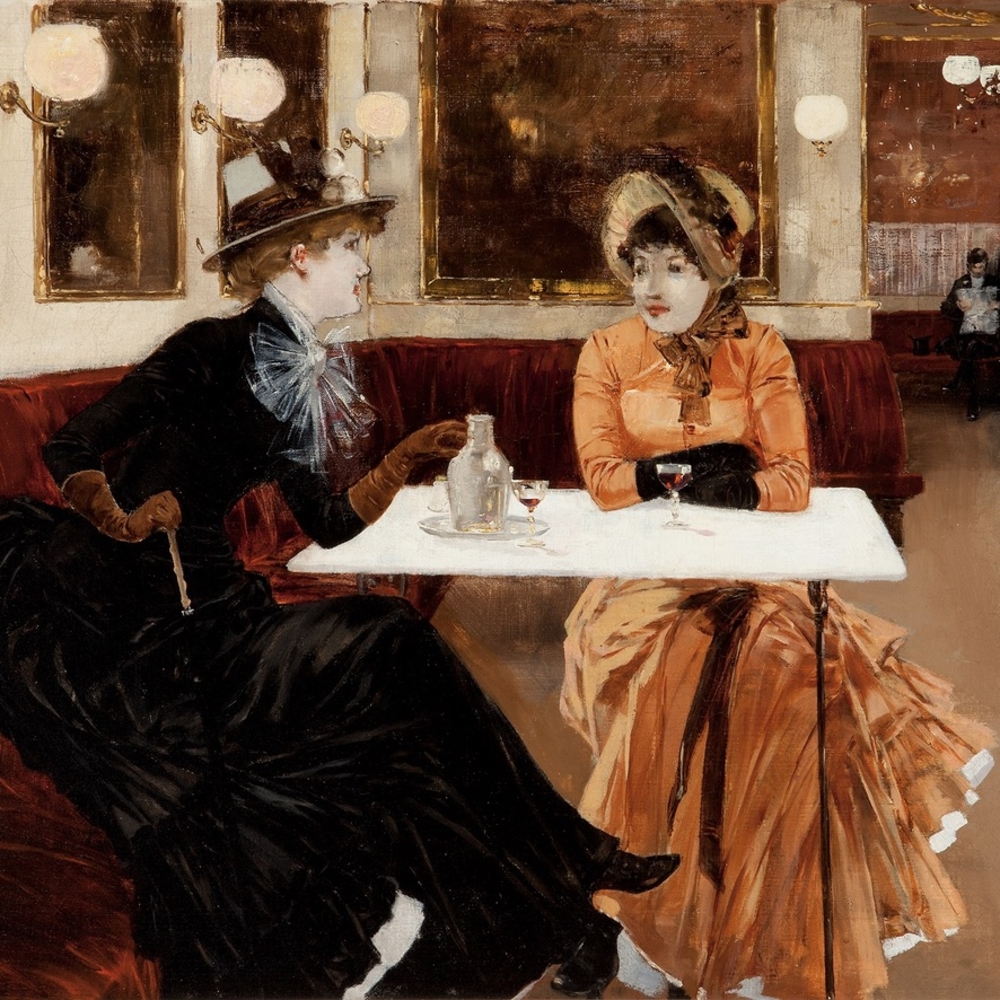
Fernand Lungren, In the Café, 1882–84.