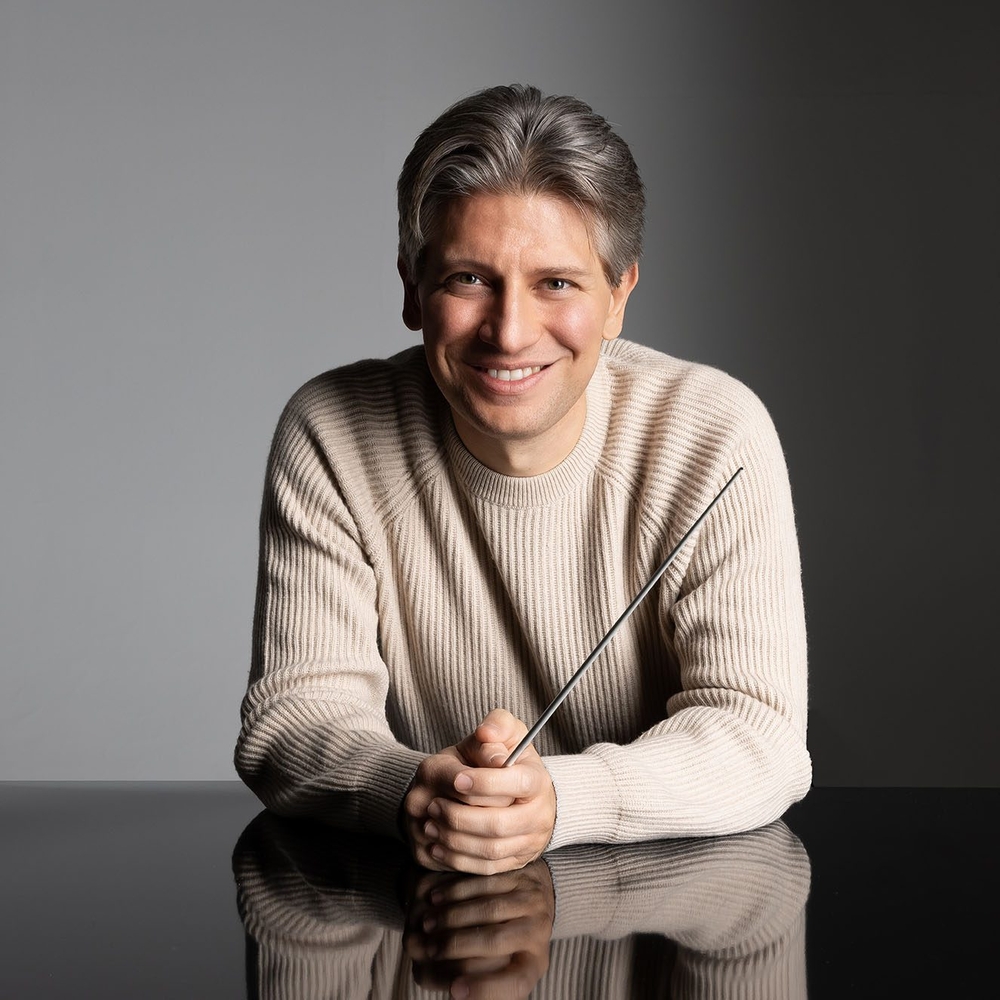
Some paths are predestined. Rather than hire a babysitter for her toddler, Daniele Rustioni’s mother—a member of the professional chorus of the Teatro alla Scala in his native Milan—took him along to rehearsals. Did he soon join the boys’ choir there? Is the Pope Catholic? Growing up, Daniele also studied cello, piano, and organ, plus composition—the bedrock discipline for a true maestro, though many don’t bother. As a graduate of the Milan Conservatory and the Royal Academy of Music, London, Rustioni has sterling credentials to brandish. More than that, he has a personality—lively, exacting, appreciative, unpretentious—that invites his players and singers to excel. At 43, as music director emeritus of institutions in Lyon, Belfast, and Tuscany, he seems focused on free-lancing for now—a preference with which his principal-guest appointments with the Metropolitan Opera and Tokyo Metropolitan Symphony Orchestra do not interfere. Last season, a concert performance with the Juilliard Pre-College Orchestra—he sandwiched the world premiere of the jazz legend Patrice Rushen’s supertricky Keepers of the Krown between the Met’s dress rehearsal and opening night of a dicey revival of Giordano’s Andrea Chenier—bore especially glowing witness to Rustioni’s talent to inspire. Back-to-back programs with the Philadelphia Orchestra at the sylvan Saratoga Performing Arts Center, open to the (often balmy, sometimes humid, not infrequently electric) night air of the Adirondacks promise pleasures of a high order. The sweeping Korngold Violin Concerto, headlined by the rising star Bomsori Kim, plus Mussorgsky’s indestructible Pictures at an Exhibition are on offer on August 12; the next evening, Emanuel Ax is the magisterial soloist in Beethoven’s Piano Concerto No. 5 (“Emperor”), with the First Symphony of Brahms (also known among aficionados as Beethoven’s Tenth) to follow. —Matthew Gurewitsch