The book. Few objects better illustrate how dramatically craftsmanship has changed. Long before industrial presses and digital publishing, every manuscript was written, painted, and bound entirely by hand. A medieval manuscript was the end result of a long process: animal skins had to be transformed into parchment, text was painstakingly copied by scribes with quill pens, illuminators added brilliant pigments and gold leaf to each page, and binders assembled the finished sheets into a bound book. The Making of a Medieval Manuscript, on view at the Getty Center, explores each of these stages through works from the Getty Museum’s collection. Featuring Christian, Jewish, and Muslim manuscripts from Europe, Armenia, and Ethiopia—works dating from around 500 to 1500—the exhibition highlights both the extraordinary craftsmanship and the cultural diversity of medieval book production. Among the highlights are a late-14th-century French manuscript of chess problems, written and illustrated on meticulously prepared calfskin parchment, and the 13th-century Rothschild Pentateuch. Original tools, materials, and explanatory videos further reveal the remarkable skill that went into these handmade books. —Clara Scholl
Arts Intel Report
The Making of a Medieval Manuscript
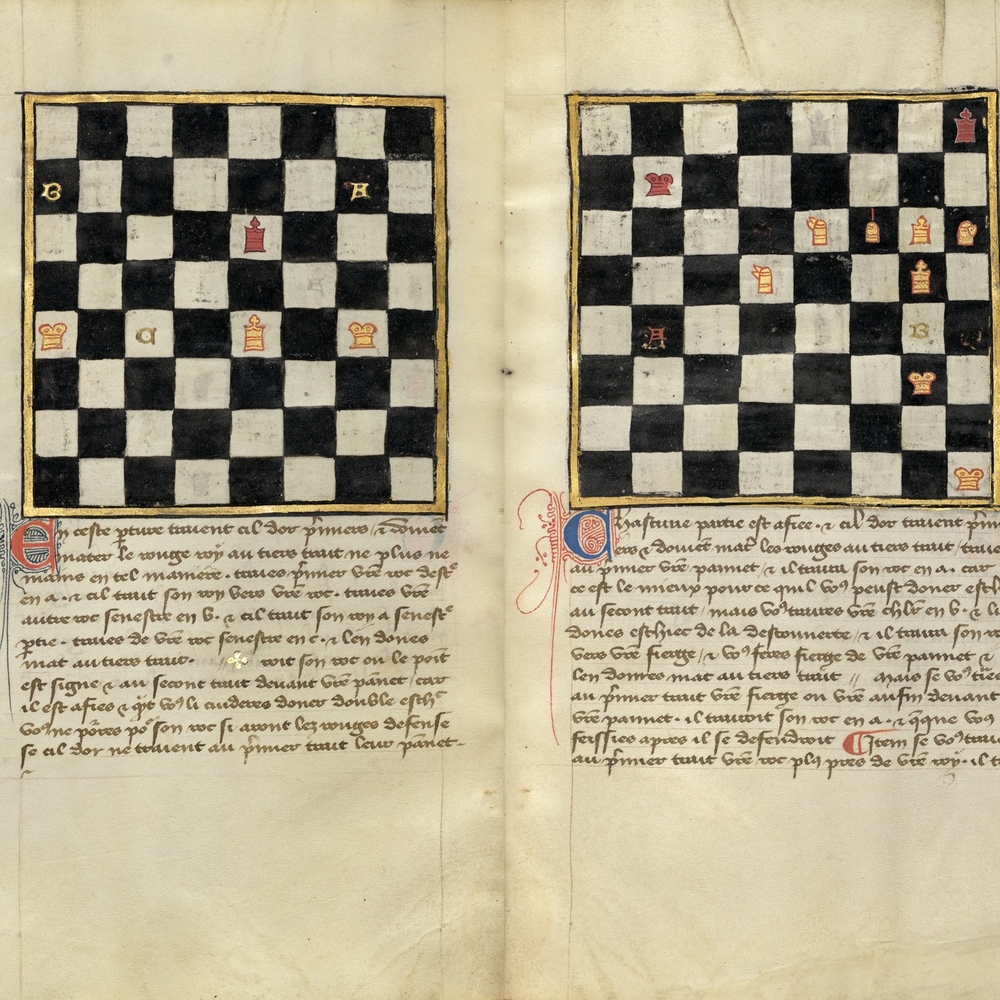
“Two Chess Problems” from Book of Chess