When people say they’re surrendering to a higher power, they don’t usually mean A.I. Or they didn’t. Alexander Whitley’s approach to The Rite of Spring is timely. The 45-year-old British choreographer is not a newcomer to machine intelligence. He has been combining onstage dancers with virtual forms for years and by all available means: V.R. (be the director of a C.G.I. adventure), A.R. (be a flesh-and-blood participant in the make-believe), motion capture (be the model for scampering pixilated ghosts). With dance, these transmutations are harmless because always detectable, always incomplete. The menace rises, though, when the manipulable instrument is not the body but the mind. Since Stravinsky and Nijinsky caused a scandal more than a century ago, choreographers have been tweaking the scenario to ruffle us all over again. Whitley’s ingenious premise—that we won’t even know when we have sacrificed ourselves to a higher power, because it will have become us—just might do it. —Apollinaire Scherr
Arts Intel Report
Alexander Whitley Dance Company: The Rite of Spring / Mirror
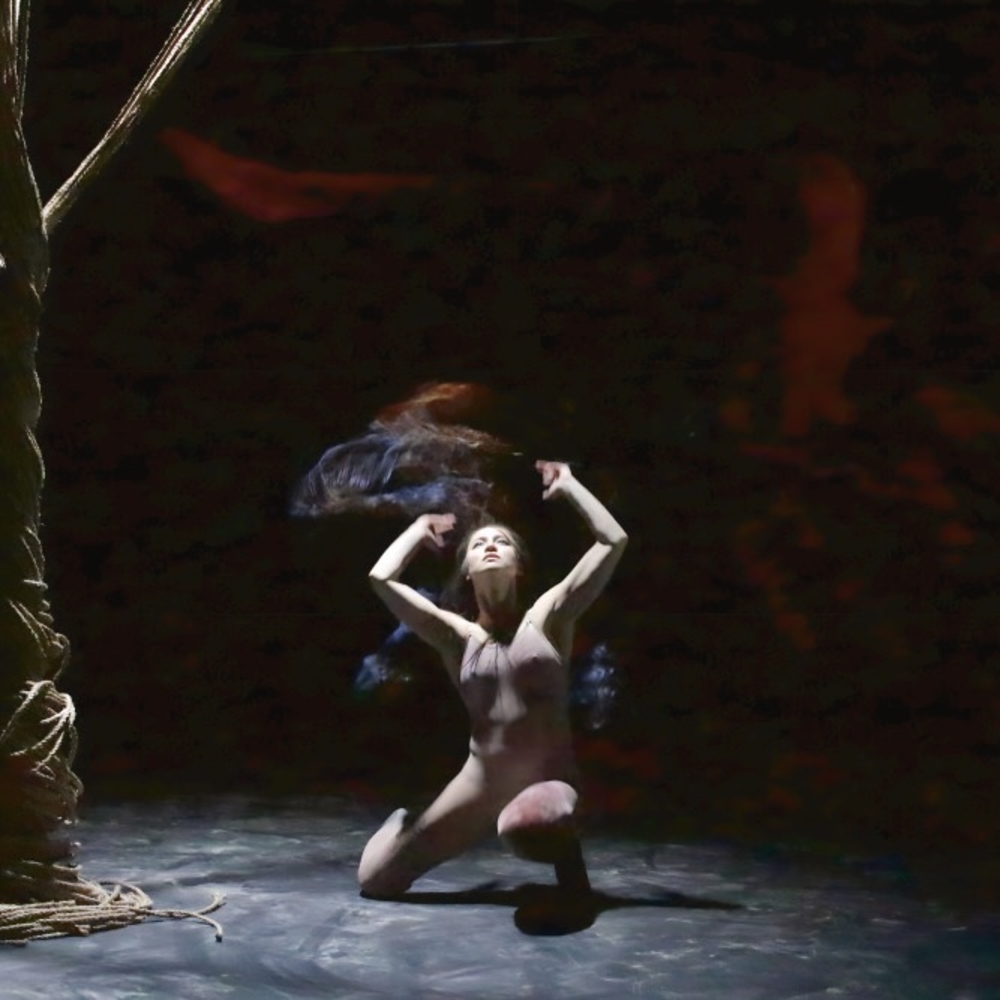
A moment from the Alexander Whitley Dance Company’s The Rite of Spring.