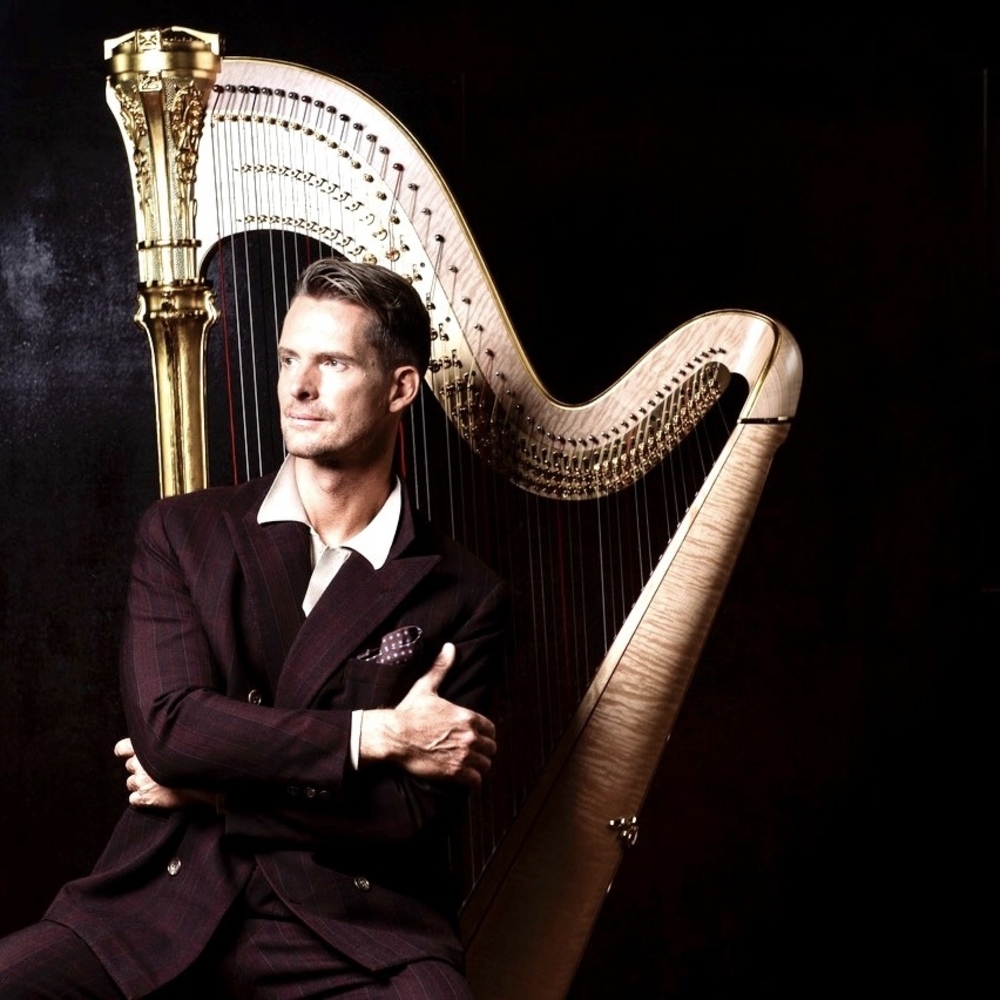
The harp is a lovely piece of musical carpentry—a fact not lost on those who play it. The French harpist Xavier de Maistre, who could double as James Bond at the casino, makes an effortlessly and classily sensational impression while at work, and the play of his fingers as they waken the strings (not to mention that of his palms as he gently mutes them) is a visual pleasure of a high order. Still, it’s the music that’s paramount, and few vehicles give him a better chance to shine brighter than the Harp Concerto in E-flat major, op. 74, of Reinhold Glière (1875–1958). Perhaps most familiar to Western concert audiences for the gung-ho pops encore “The Russian Sailor’s Dance” from his Soviet agitprop ballet The Red Poppy, Glière deserves a more comprehensive look. Of German and Polish descent, he was born to a maker of brass instruments in Kiev. A prolific composer and faculty kingpin in the conservatories of Kiev and then Moscow, he came to be known as “the father of Soviet composers.” Among the dozens who passed through his studio were Serge Prokofiev and Aram Khachaturian (of “Sabre Dance” fame)—but also the high-born Vladimir Dukelsky, better known in America as Vernon Duke, tunesmith for lyricists like Ira Gershwin, E. Y. (“Yip”) Harburg, Johnny Mercer, and Odgen Nash. Glière’s own output in all the major genres was voluminous—yet for his celebrated Harp Concerto, he relied heavily on the technical advice of Ksenia Alexandrovna Erdely, a harp virtuoso in excelsis. So significant was her contribution that Glière offered to credit her as co-composer. She declined but is acknowledged as editor in the original edition of the score. —Matthew Gurewitsch