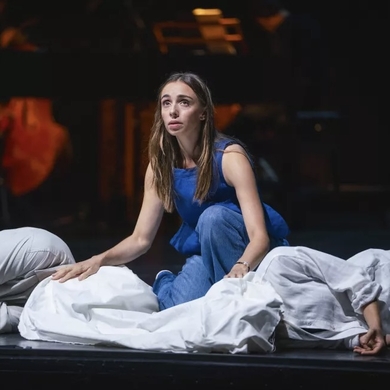
“My fingers ache from writing all those recitatives.” That’s what Wolfgang Amadeus Mozart, all of 14, had to say to his big sister Nannerl in Salzburg while preparing Mitridate, Re da Ponto for the carnival season in Milan. It was a plum commission, and little Wolfgangerl aced it, landing a repeat engagement two seasons later. Unsurprisingly, however, he never heard Mitridate again. True, composers were forever recycling the same librettos—chiefly the highfalutin’ tragedies manqué of Pietro Metastasio, the Shakespeare of the prestigious opera seria form. But in every self-respecting opera center, new casts expected material custom-tailored to their specialties. Which to an extent explains why Neapolitans will be encountering Mitridate this season for the very first time. Here’s a cheat sheet. The eponymous king of remote Pontus is at war with the Romans. According to false report, he has died in battle, and as the curtain rises, his two sons are competing for the hand of Dad’s fiancée, who knows exactly which one she wants. But then Dad shows up, with another princess in tow. Jack shall have Jill? Yes, eventually, twice over, though not until Dad has died by his own hand, leaving the next generation to fight the losing battle against the Roman Republic. The tenor Giovanni Sala, thrilling in timbre and phrase in Verdi and the classic Mozart roles, leads the cast as the king. The glittering soprano Sara Blanch is Aspasia, the queen bee with more drones buzzing around her than she knows what to do with. Franco Fagioli, a tiger among countertenors, portrays Farnace, the naughty prince who has been playing footsie with the Romans. If “Venga pur,” Farnace’s volcanic outpouring of filial defiance fails to bring down the house, I’ll eat my hat. But in fact, the entire cast has chances to score big, both in pyrotechnic and elegiac modes. Though Mitridate is in a style Mozart and the world outgrew, in a worthy performance, it strikes like lightning. —Matthew Gurewitsch