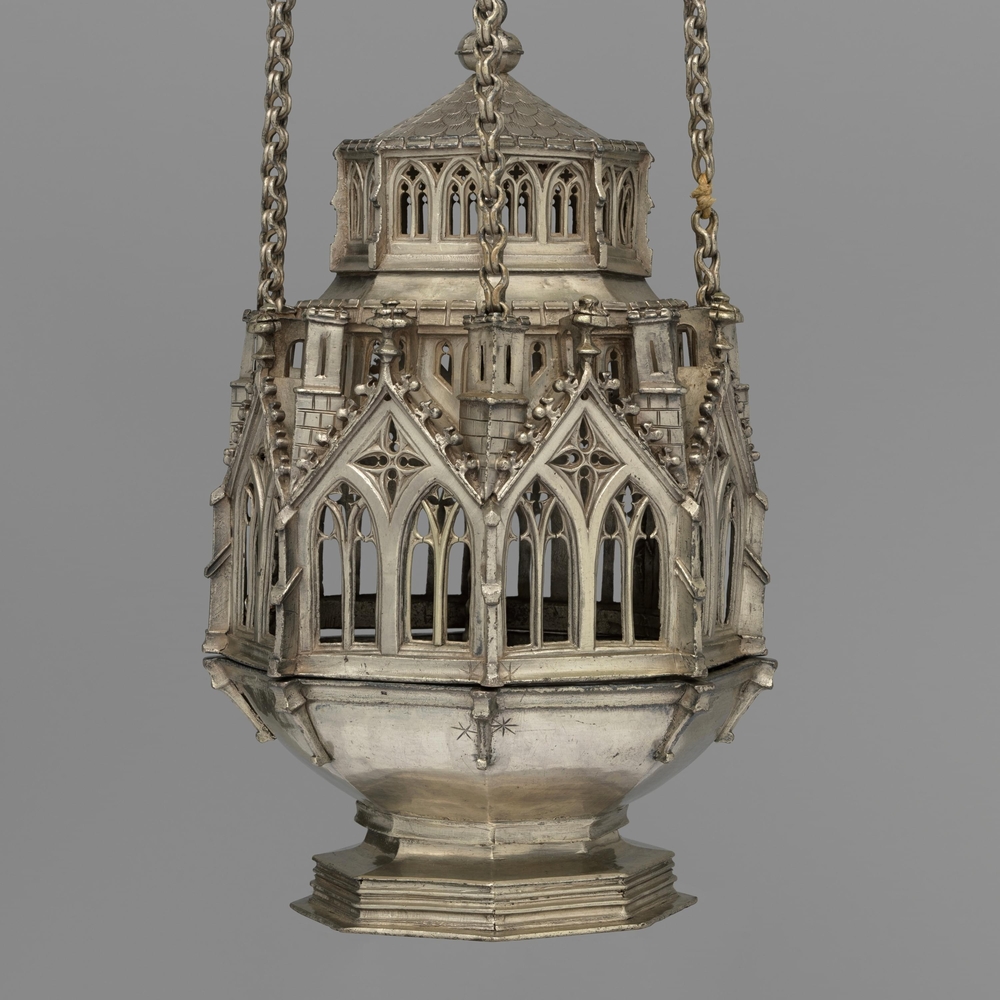
Before a Gothic cathedral could rise—before the pointed flèches and the soaring nave that made Romanesque architecture look like the work of people who feared the sky—someone had to draw it. On parchment, with compass and straightedge and ruling stylus, master masons of the 13th century began to develop a visual language for building plans, elevations, tracery windows, and portals. These drawings are among the least-known artworks of the medieval period, and also among the most consequential. The Met is now presenting more than 90 of them—drawings and prints alongside goldsmith works, sculpture, and painting. —Elena Clavarino