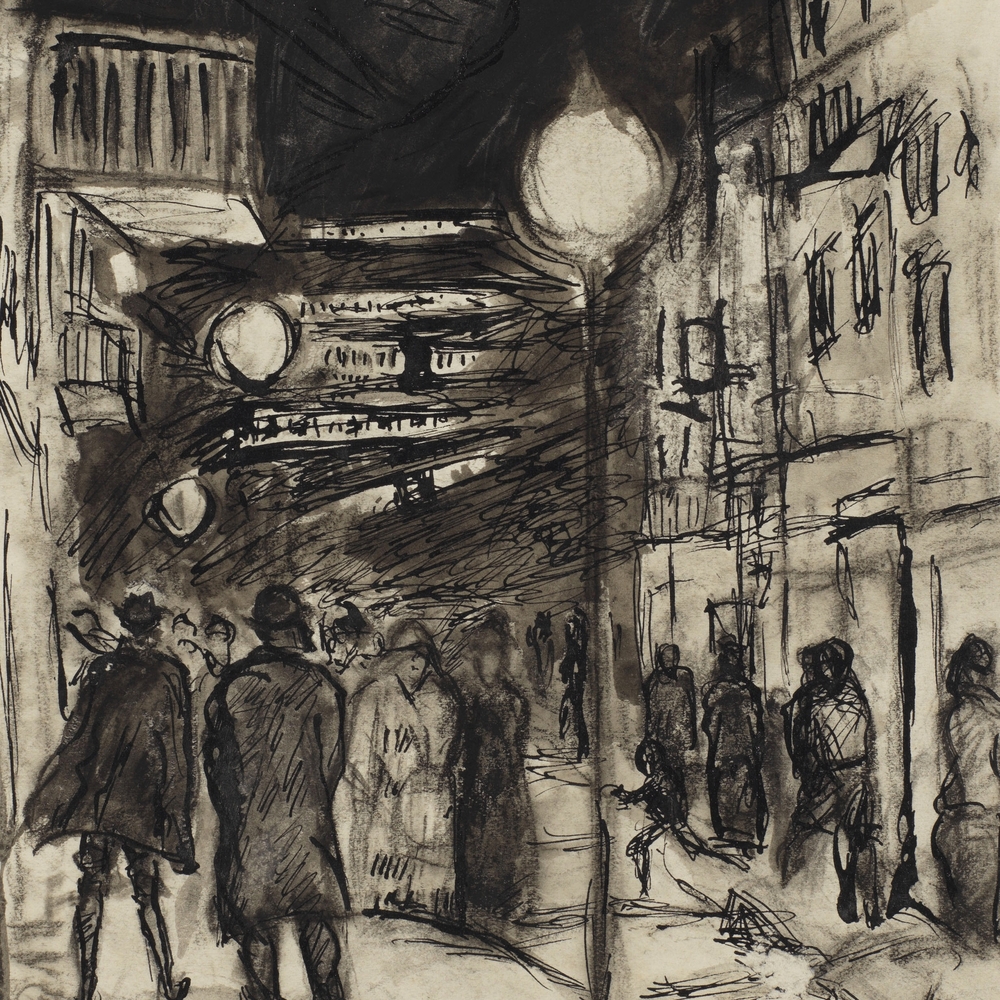
Max Beckmann’s life was marked by war and upheaval. During the First World War, the artist witnessed horror as a medical orderly; when it was over, his art changed. He stopped looking to the ideals of the Old Masters and began painting distorted figures with rough faces. He squeezed actors, heroes, cabaret singers, and thugs into jumbled compositions, action-packed. In Weimar Germany, Beckmann achieved success. But in 1933 the Nazi regime labeled him a “cultural Bolshevik.” He moved to Amsterdam in 1937 and stayed there for 10 years of self-imposed exile. Beckmann eventually made it to the U.S., where he died in 1950, at 66. This exhibition features the most intimate facet of his oeuvre—his drawings—which functioned as diaries. —Elena Clavarino