
Do you know your kimchi from your kefir, or the benefits of apple cider vinegar versus sourdough? Fermented foods containing live beneficial bacteria help to boost the diversity of the gut microbiome and according to studies, can enhance everything from immune function and digestion to cognitive function and mental health.

Making your own sourdough bread or fermenting your own kefir—a sour-tasting liquid made using water or milk and kefir “grains,” bacteria and yeast—is laborious, which is why the global market for fermented products, worth almost $50 billion, is predicted to nearly double over the next ten years.

However, not all shop-bought items are created equal, warns Dr. Linia Patel, a researcher in the department of clinical sciences and community health at the University of Milan in Italy and a spokesperson for the British Dietetic Association. “It can be confusing and, as they become more popular, so more misconceptions arise,” she says.

Mass-produced kefir products, for instance, use bacteria and yeasts extracted from kefir grains rather than the grains themselves, which, according to a study in the Journal of Food, reduces both the amount and diversity of probiotics. “Kefir is not a legally protected term and some of the products out there are terrible,” says Dr. Federica Amati, research associate at Imperial College London’s WHO Collaborating Center for Health Education and Training.

There are also pitfalls to avoid when buying kombucha, a fermented tea, which uses sugar to ferment bacteria. “Traditionally made kombucha doesn’t have a high sugar content by the time you drink it, as the sugar added is consumed by the microbes—it actually tastes a bit sour,” Amati says. “If you buy it ready-made, avoid brands with added sugar, fruit or flavorings which can be massively sweetened.”

What’s the easiest way to add fermented food to my diet?

“Most of the research we have is on fermented dairy, so that’s a great place to start,” Patel says. “Look for plain live yogurts, which often have the cultures listed on the label.”

Cheese is another option. Cheddar and Gouda, in particular, are rich in probiotics, according to a paper in the International Journal of Food Science.

“The aging process of these and other cheeses, including Swiss emmental, provolone, edam, gruyère and parmesan, allows for certain probiotic strains such as Lactobacillus and Bifidobacterium to survive,” says Alex Ruani, nutrition researcher at University College London and chief science educator at the Health Sciences Academy. “Some of these bacteria make it to your gut alive.”

Cottage cheese labelled as containing live cultures is a good choice too. “Nearly half of the bacteria in some cottage cheese is Lactococcus lactis, with good amounts of Lactobacillus casei and Lactobacillus kefiranofaciens, the type that are also present in fermented yogurt and kefir,” Ruani says. “Because low-fat versions contain more moisture, they often provide a more favorable environment for the probiotics in cottage cheese to survive.”

One surprising source of beneficial bacteria is Philadelphia cream cheese. “We found in studies that it contains three strains of microbes, so eating it on a slice of authentic sourdough is a great idea,” Amati says. “I like to stir in a spoon of kimchi with my cream cheese to really power up the ferment dose.”

“Sourdough isn’t a source of probiotics as the bugs don’t survive once it is baked,” Ruani adds. “But even though they are not living microbes, the prebiotic carbohydrates and organic acids present in the dough do help to feed beneficial gut bacteria once the bread is eaten.”

Is kefir better for me than yogurt?

Kefir and yogurt differ in their microbial diversity and texture. However, Ruani says: “There’s no strong evidence that fermented products such as kombucha, kimchi or kefir are outright better for you. Each has its benefits.”

“Kefir is fermented with both bacteria and yeast, creating a wider variety of bacterial strains compared with yogurt, which is typically fermented with just a couple of bacterial species,” Patel says.

A study in the journal Microorganisms suggested that up to 50 different bacterial and yeast species may be found in kefir. Mixing yogurt and kefir together gives you a double whammy. Some products, such as Sainsbury’s Kefir Yogurt and Biotiful Gut, do this for you.

What should I look for at the supermarket?

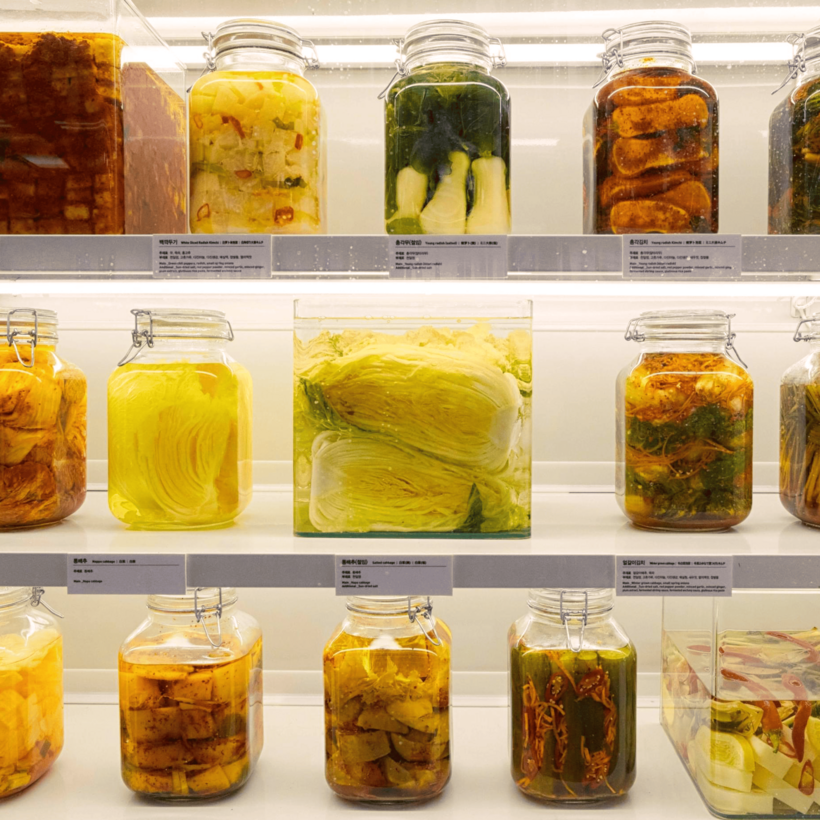
Miso, fermented soy beans, kimchi (salted, fermented cabbage with other vegetables) and sauerkraut, another form of fermented cabbage, are widely available in supermarkets. But you will need to head to the chiller cabinet for an authentic fermented product.

“All live fermented foods need to be stored in a fridge,” Amati says. “Microbes produce gases and can explode if they proliferate too much, so you either need to open a jar every few days to let the gases out—called burping—or refrigerate.”

Non-chilled jars and tins of fermented vegetables have usually been pasteurized to extend their shelf life, meaning the live bacteria are destroyed. “Although the microbes are dead, they still stimulate a healthy immune response,” Amati says. “They are not as effective as live microbes but still have some beneficial effects.”

Eli Brecher, a registered nutritionist and gut health specialist, says that good brands include Vadasz, Cultured Collective and Eaten Alive.

Do jars of pickled beets and onions count as a fermented food?

The terms pickling and fermentation are not interchangeable. With pickling, a vegetable is preserved by creating an acidic environment, usually by adding unfermented vinegar, which doesn’t support the growth of good bacteria required for fermentation.

“Traditional fermentation of vegetables uses salt brine and naturally occurring bacteria to produce lactic acid and probiotics,” Ruani says. “When vegetables are submerged in vinegar, the acidity of the vinegar prevents microbial fermentation and essentially kills off all bacteria, including beneficial probiotic types.”

“Vinegar is not a bad thing and does have its own benefits,” Amati adds. “By all means eat pickled vegetables, but don’t expect the same gut health gains.”

Which sourdough loaf should I buy?

Traditional sourdough is made using a “starter” mixture that is soured through a fermentation process that increases certain bacteria in the dough, producing a characteristic, slightly sour taste and chewy texture. But with no legal definition for the term sourdough, what you get when you buy a loaf varies enormously.

In October, the (now defunct) Campaign for Real Bread published a report on sourdough that said “no supermarket has ever … signed up to the Real Bread Loaf Mark scheme,” and only two nationally available brands—Bertinet Bakery and Celtic Bakers—appear on its latest list of 180 Loaf Mark users.

That’s not to say no supermarket sells real sourdough, but you will need to scrutinize the labels. If the ingredients list includes yeast, any additive or a raising agent other than a live sourdough starter culture, then it’s not genuine sourdough bread, according to the report.

It adds that “fermented wheat flour,” listed as an ingredient on some sourdough loaves by Jason’s, Jacksons of Yorkshire, Hovis, Allinson’s and Kingsmill, among others, is not the same as a sourdough starter and can incorporate propionic acid added as a preservative to enhance shelf life. “If you see commercial yeast, sugar, malt, vinegar or other additives on the label, that loaf might be simply mimicking the flavor without true prior fermentation,” Ruani says.

Is a daily glug of apple cider vinegar enough to produce benefits?

If it’s good enough for Victoria Beckham, who swears by a few tablespoons of diluted apple cider vinegar on an empty stomach each morning, is it worth the rest of us buying the gold-amber liquid credited with gleaming skin, glossy hair and boosted gut health?

Apple cider vinegar is made by fermenting apple juice using “the mother,” a blob of proteins, enzymes and good bacteria, as a “starter,” similar to how sourdough starters are used to make a loaf. Its main active compound, a by-product of the fermentation process, is acetic acid, which provides its distinctive sour smell and flavor.

Because it is highly acidic, Patel says it should always be diluted with water if you drink it but can also be added to salad dressings. “Apple cider vinegar is just one of the fermented foods you can add to your diet,” she says. “But it is not a magic bullet as gut health relies on a variety of foods in the diet.”

Can I add coffee, chocolate and wine to the fermented-food list?

Chocolate and coffee have undergone fermentation, but don’t count as fermented foods because there are no live microbes left by the time you consume them. Still, the fermenting process has made them healthier.

“Coffee is fermented in production so that the beans develop flavor and aroma compounds,” Ruani says. “Because the beans are roasted at high heat, they are no longer a source of live probiotics by the time they reach your mug, but coffee is still packed with plenty of beneficial plant compounds.”

Dark chocolate is another fermented food by origin. “By the time you eat chocolate, no live bacteria remain,” Ruani says. “But some of the polyphenols in cocoa survive processing and can act as prebiotics in the gut, feeding good microbes.”

Alcoholic drinks such as beer and wine also begin with fermentation, but the yeast is typically filtered or killed during processing. “They don’t provide live cultures, and we don’t need to be drinking more of them,” Brecher says.

How often should I be eating fermented foods?

You should increase your intake gradually, Eli Brecher warns: too much, too soon may cause bloating or digestive discomfort. In a soon-to-be published trial on 10,000 people, Amati and her colleagues at Zoe Nutrition asked participants to increase their intake from no fermented foods to three portions each day while recording any changes to their gut symptoms, mood, sleep patterns and energy levels. “Approximately 10 percent of people reported that bloating and gastrointestinal discomfort increased,” Amati says. “But the rest found that gut symptoms and mood improved a lot.”

Researchers reporting in the Journal of Cereal Science have also found that sourdough fermentation helps to break down some “hard to digest” components of wheat, making it gentler on the stomach than some standard types of bread.

Peta Bee is a U.K.-based freelance health journalist