Cubism was a rejection of stylistic norms, particularly the assumption that art should copy nature as it appears. “Art is made to disturb, science reassures,” said Georges Braque, one of Cubism’s founding fathers. In 1907, that disturbance became a full-force movement when Pablo Picasso painted five women in a brothel, their body parts shards of color in a twisting dimension, an assault on naturalism that was titled Les Demoiselles d’Avignon. While Cubism originated in Paris, it eventually traveled the world. The inaugural exhibition at Centre Pompidou Hanwha, in Seoul, brings together 91 works that explore the movement from its experimental beginnings in the hands of Picasso and Braque to its postwar transformation and the ways it changed how artists perceive the modern world. KOREA FOCUS, a special section, spotlights Korean contemporary artists whose work is influenced by Parisian Cubism of the early 20th century. —Maggie Turner
Arts Intel Report
The Cubists: Inventing Modern Vision
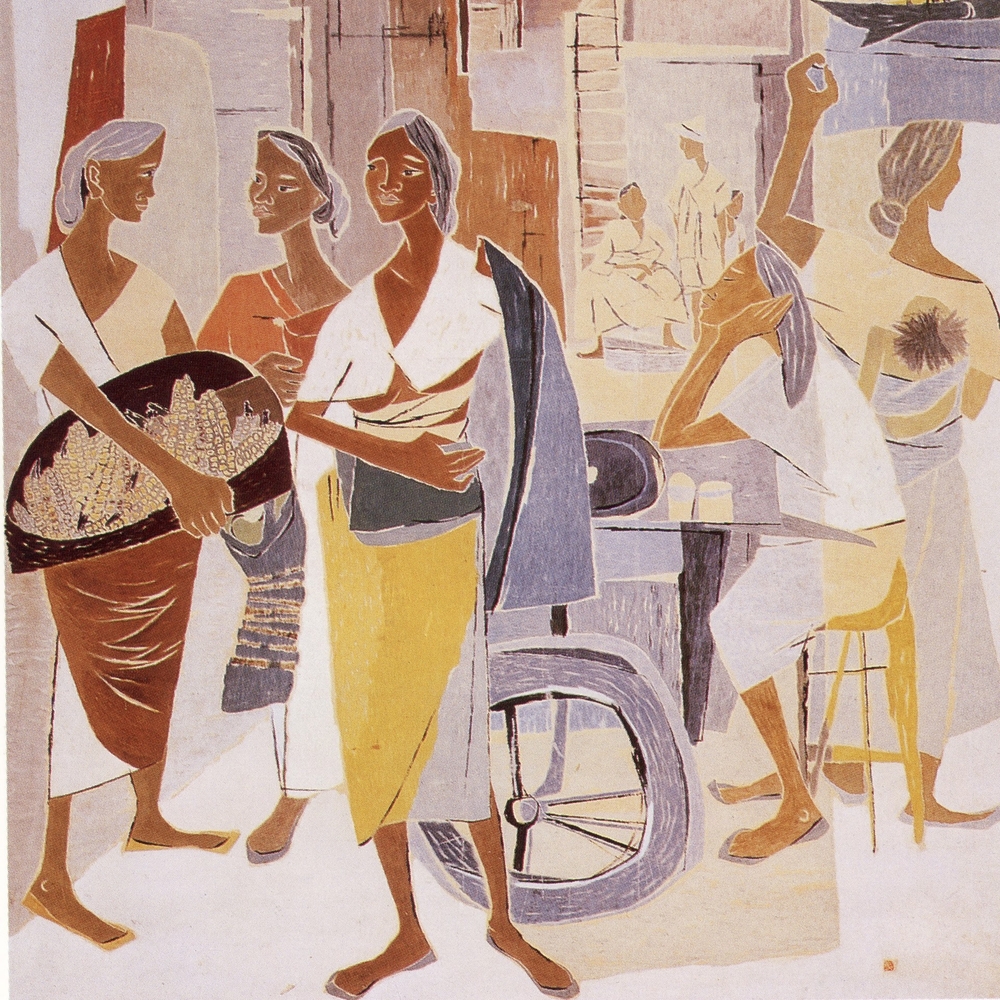
Park Re-hyun, Open Stalls, 1956.
Explore More

Until Sept 20
May 6 – Oct 19, 2026
Until Oct 18
May 9 – Nov 22, 2026
Recently Added
Art
Sept 1 – Nov 14, 2026