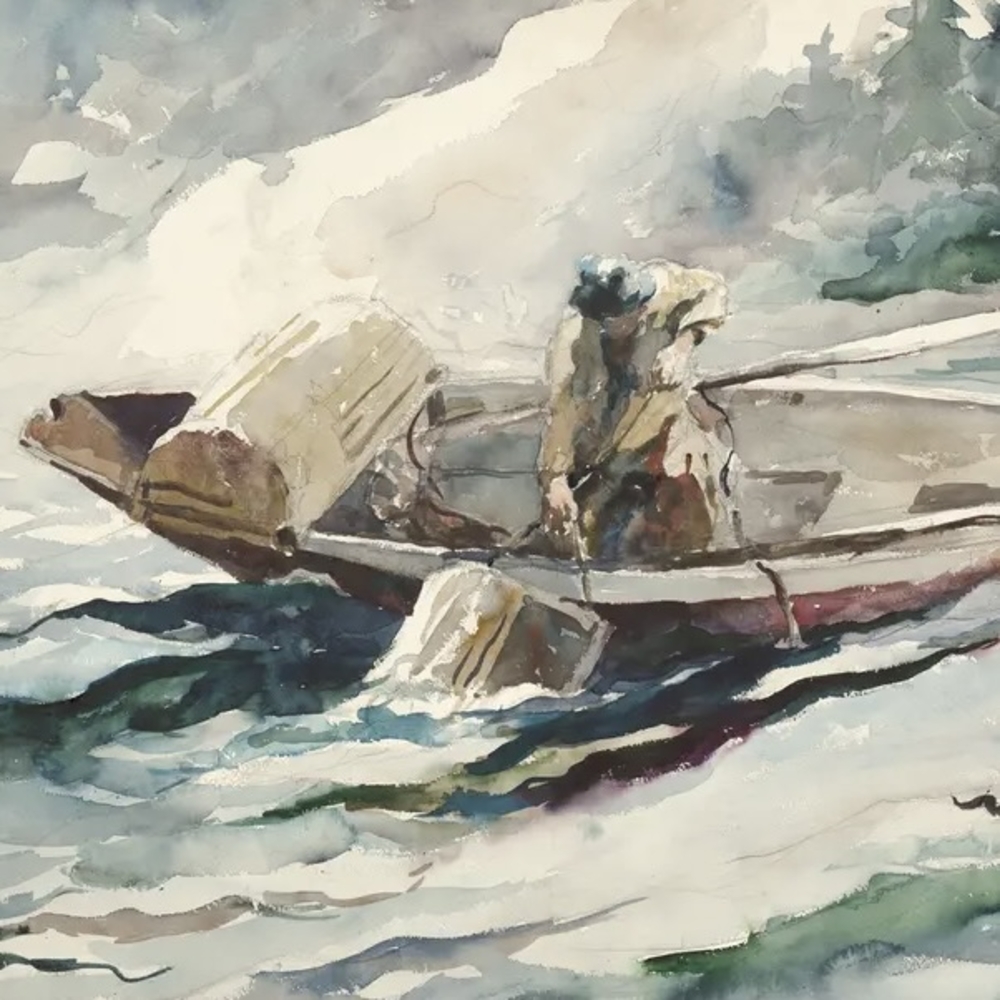
Andrew Wyeth (1917–2009) worked in watercolor, drybrush, and egg tempera. He painted landscapes, houses, and portraits from his perches in Chadds Ford, Pennsylvania, and Cushing, Maine. According to his son, Jaime, he was “obsessed with windows.” They are metaphors, after all, for seeing; and also frames for events that you might not notice if unframed. Wyeth’s father, the illustrator N. C. Wyeth, conjured dramatic episodes in books like Treasure Island and The Last of the Mohicans. His son’s art was more contemplative, spartan, and melancholy—empty rooms, windblown fields, weathered faces, salt-washed clapboard. Wyeth was never a critic’s darling but in 1977 the French elected him to the Académie des Beaux-Arts (he was preceded by John Singer Sargent). This exhibition is the first to offer an in-depth exploration of Wyeth’s profoundly precise and spectacularly selfless handling of watercolors. It includes nearly 75 works from the artist’s estate—most of which have never been on view. —Laura Jacobs
Travels to de Young in February 2027