On the southern tip of Corsica, De Renava’s biennale brings together artists who explore the party as a space of freedom, disorder, and resistance. The exhibition’s title, Nimu Dormi (No one sleeps), comes from the idea that staying awake is itself a form of resistance. A gathering, such as a festival, celebration, or protest, can loosen social rules and create momentum for collective action. The biennale, which brings together 14 international artists and six island artists and collectives, is installed across five heritage sites in the Bonifacio citadel, and unfolds like an opera: Overture, Prelude, Acts, and Triumph. At the center is a group of video performances by Nadya Tolokonnikova: Free the cobblestones, Punk prayer, Putin will teach you how to love, and Putin Ashes. Tolokonnikova co-founded Pussy Riot, the Russian feminist punk group known for staging unauthorized performances in public spaces. The group was formed in 2011, when opposition to Vladimir Putin’s government was building. Instead of playing in traditional concert venues, the women performed in Moscow’s metro stations and streets, wearing brightly colored clothing and iconic balaclavas, and then posted the footage online. Their first publicly released video, Free the cobblestones (2011), called Russians to come out and protest the upcoming parliamentary elections. The following February, five members performed Punk prayer inside Moscow’s Cathedral of Christ the Savior, protesting the Orthodox Church’s alliance with Putin ahead of the presidential election. Security stopped them in under a minute, but the video went viral. Three members, Tolokonnikova, Maria Alyokhina, and Yekaterina Samutsevich were arrested in March and convicted of hooliganism motivated by religious hatred. All three were sentenced to two years in prison; Tolokonnikova served 21 months. Two months after her release, she went with Pussy Riot to the 2014 Winter Olympics to perform Putin will teach you how to love. Cossack militia broke it up with horsewhips and pepper spray, tearing off the group’s masks. The footage became part of the finished video. All four works take place in spaces controlled by the state or shaped by social convention, and refuse to be quiet or obedient. Here lies the question Nimu Dormi asks: can celebration and collective action become forms of resistance? For Tolokonnikova and Pussy Riot, the answer is yes. —Clara Scholl
Arts Intel Report
Nimu Dormi
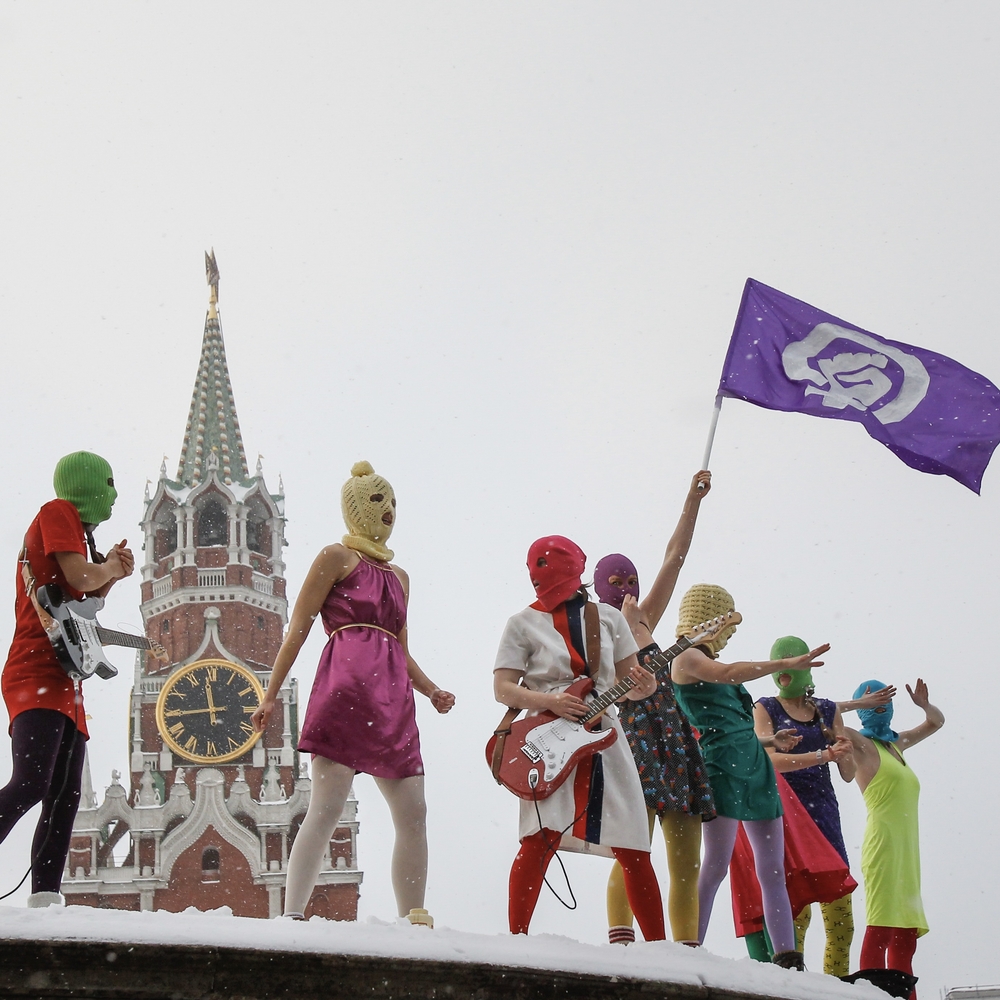
Nadya Tolokonnikova & Pussy Riot, “Putin Has Pissed Himself,” De Renava 2026