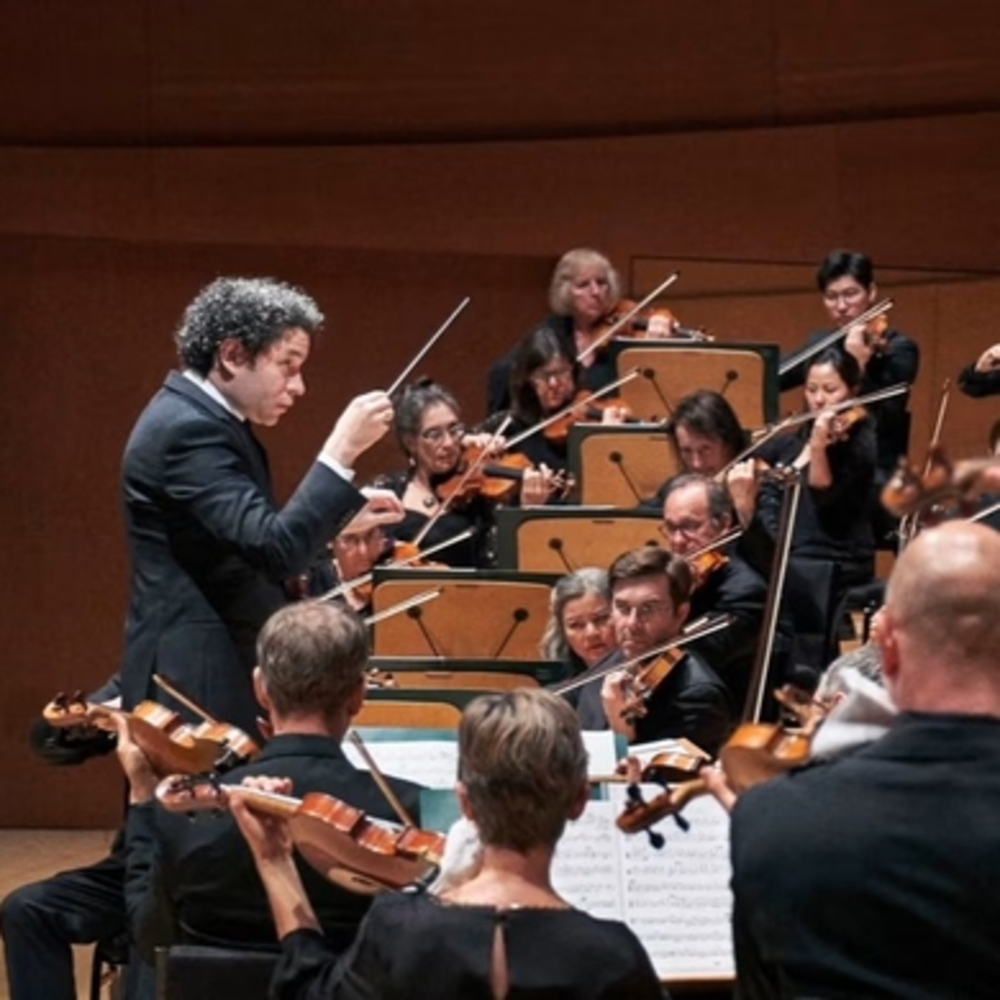
Gustavo Dudamel, a specialist? Anything but. For all the energy he pours into the music of our own time, he has, throughout his tenure as music and artistic director of the LAPhil, claimed the whole Western symphonic canon as his province. But while “Western,” in that sense, means 19th-century and Eurocentric, his farewell program focuses on 20th-century classics from the Western hemisphere. Two splashy choral frescoes share the bill, each a tour de force for singers and instrumentalists alike. In Harmonium (1981), John Adams lends ecstatic voice to Donne’s brain twister “Negative Love” and Emily Dickinson’s top hits “Because I could not stop for Death” and “Wild Nights.” In Cantata Criolla (1954), Dudamel’s Venezuelan compatriot Antonio Estévez conjures up a singing contest between the devil and a cowpoke named Fiorentino. The text is by the lawyer, educator, and hugely popular folk poet Alberto Arvelo Torrealba. By contrast, the antagonists’ signature tunes derive from Gregorian chant—for Fiorentino (Anthony León, tenor), it’s Ave maris stella, a hymn to the Virgin; for the devil (Gustavo Castillo), it’s the Dies Irae, that harrowing preview of the Last Judgment. The Los Angeles Master Chorale (Grant Gershon, artistic director) shares top billing. —Matthew Gurewitsch