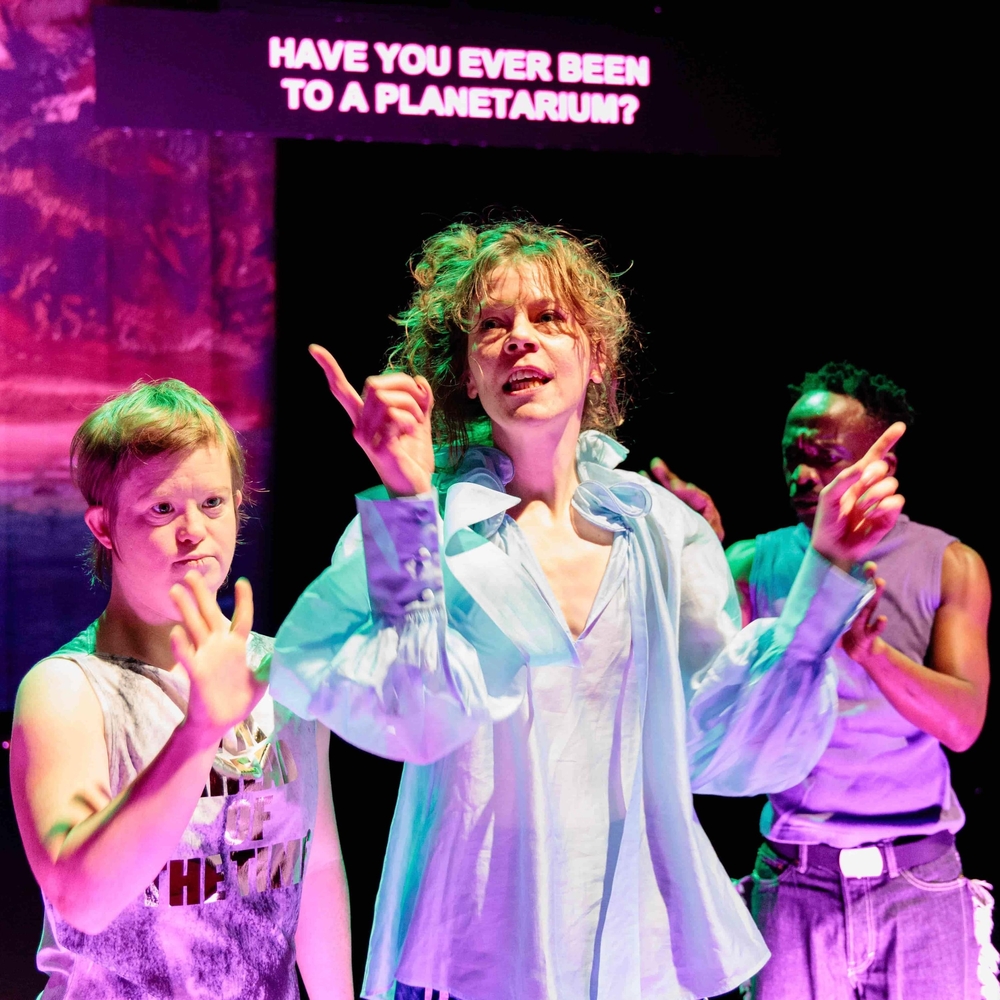
This year’s Festival de Marseille is almost a caricature of the current dance scene. There’s a piece for every species of marginalized: the prisoner, the survivor of failed revolution and state, the disabled, the exile and immigrant, even the obscure folk form. But the choreographers approach these grim realities by hip, urban means. North African gnawa music, conducive to trance states, slides toward rave in the 250-person Urban Gnawa Project, as in, less massively, Taoufiq Izeddiou’s Border Dance. Mahraganat—the popular dance music that sprung up with the Arab Spring—becomes an instrument for personal confession in the hands of the Egyptian choreographic team Temps Fort Mahraganat. Everyone is sequined in Argentine Lisi Estaras’s “differently abled” What We Can Do Together. And to convey Afghani rural society under imperialist duress, Feda Wardak populates his monumental stage set with choreographer Saïdo Lehlouh’s loose hip-hop to Tunisian D.J. Deena Abdelwahed’s glitchy, eerie, airless electronica. The Maghreb figures largely, as it does in Marseille. When not, the festival maintains the city’s bright, rough character with works by likeminded choreographers, such as the award-winning Belfast tough Oona Doherty and Moritz Ostruschnjak, whose spirited, gestural NON + ULTRAS flutters with 500 sports-fan scarves. —Apollinaire Scherr