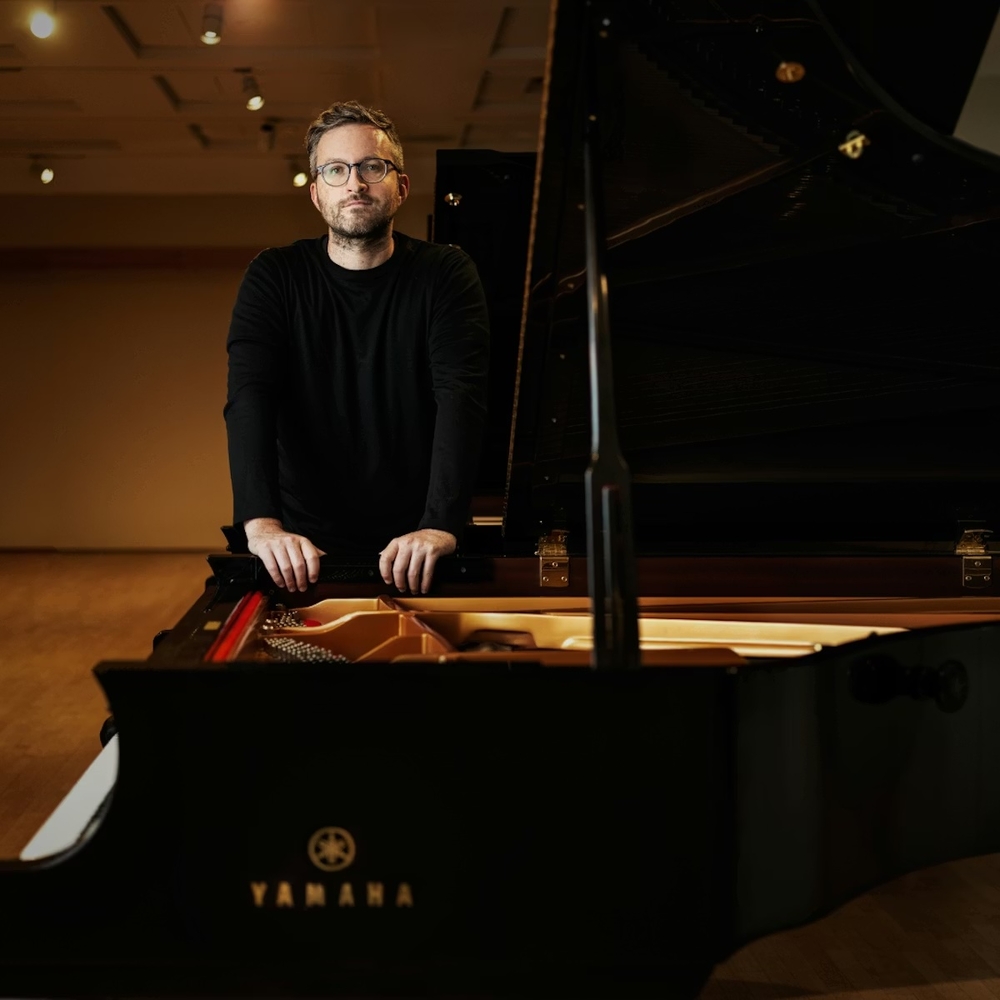
Traduttore—traditore, the Italians say; to translate is to betray. The caveat applies in spades to Das Buch der Klänge, a gateway to the alpha state by the German composer-pianist Hans Otte (1926–2007). English sources give the title as The Book of Sounds, suggesting nothing so much as swatches for wallpaper music. But Klang isn’t sound as such. It is sound that’s rich in resonance, be it acoustic, emotional, or even spiritual. And such are the sounds Otte had in mind. Mentors who shaped him included on the one hand the methodical Paul Hindemith, composer and inventor of Gebrauchsmusik, or “music for practical application.” On the other hand, there was the preternaturally gifted piano virtuoso and lepidopterist Walter Gieseking, who made the keyboard sing and mastered scores of the utmost complexity simply by looking at the notes on the page. As a radio broadcaster in the out-of-the-way Free Hanseatic City of Bremen, Otte for years gave airtime to trailblazers like John Cage, La Monte Young, John Adams, Keith Jarrett, and Steve Reich. Though nourished by many streams, Das Buch der Klänge has a flow all its own. Its 12 sections, running 75 minutes in total, invite the listener as well as the performer into a primal stillness from which consonance and eventually first shimmers of dissonance arise. “A celebration of life in all its colors,” one of Otte’s disciples has called Das Buch der Klänge, which to some may suggest music shallower and gaudier than it is. Conor Hanick, one of a handful of Otte champions fighting the good fight for him, recently released a recording on the Il Pirata label that feels hardly less pristine than the composer’s own shimmering account of 1984. —Matthew Gurewitsch