Henri de Toulouse-Lautrec (1864–1901) was born into an aristocratic family in the south of France. After childhood accidents left both legs permanently stunted, he retreated into drawing. Intensely disciplined, Toulouse-Lautrec eventually produced definitive images of Belle Époque Paris. Working in color lithography—a popular and technically demanding medium—he immortalized the performers and habitués of Montmartre’s cafés and cabarets with a graphic precision that recalled both Japanese woodblock prints and the art of Edgar Degas. The San Diego Museum of Art holds one of the world’s most comprehensive collections of Toulouse-Lautrec, thanks to a 1987 gift of more than 100 of his paintings, drawings, and prints from the Baldwin Foundation. To celebrate its centennial, the museum now has 50 of these beauties on view. —Elena Clavarino
Arts Intel Report
Cafés and Cabarets: The Spectacular Art of Toulouse-Lautrec
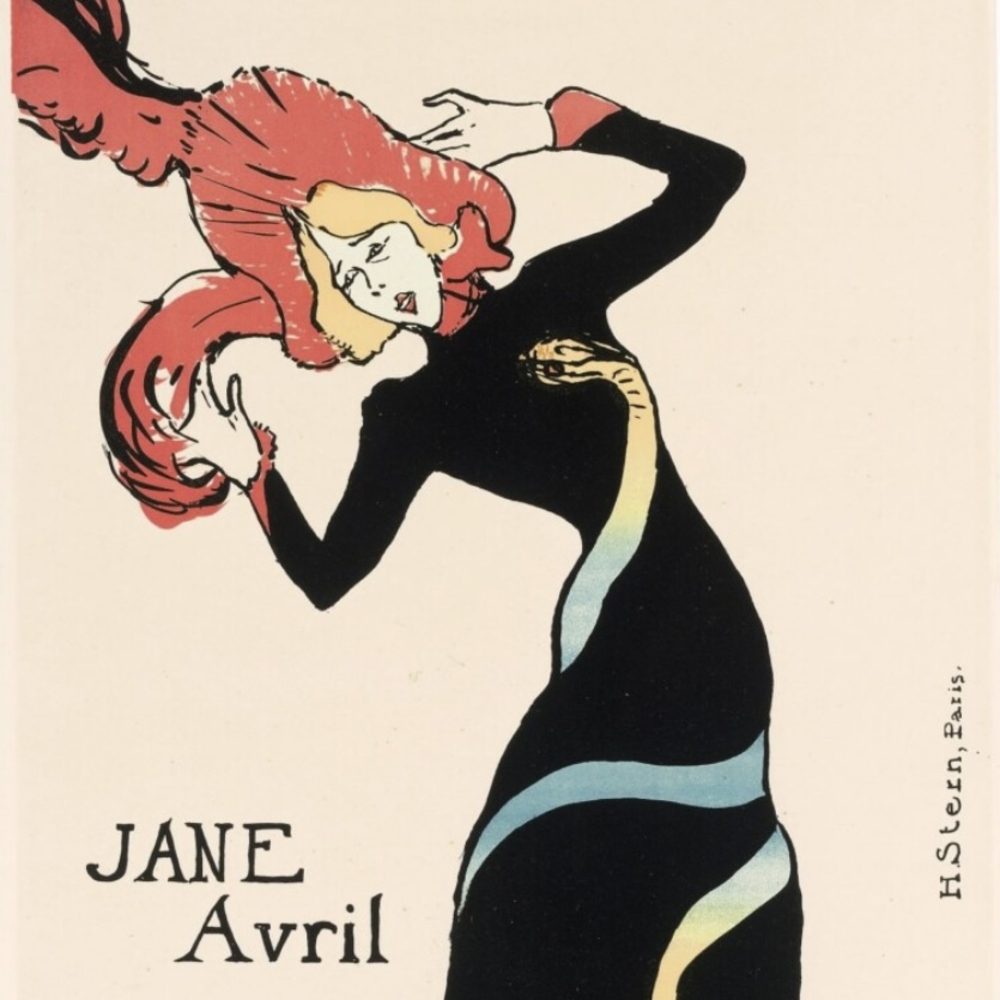
Henri de Toulouse-Lautrec, Jane Avril, 1899.