
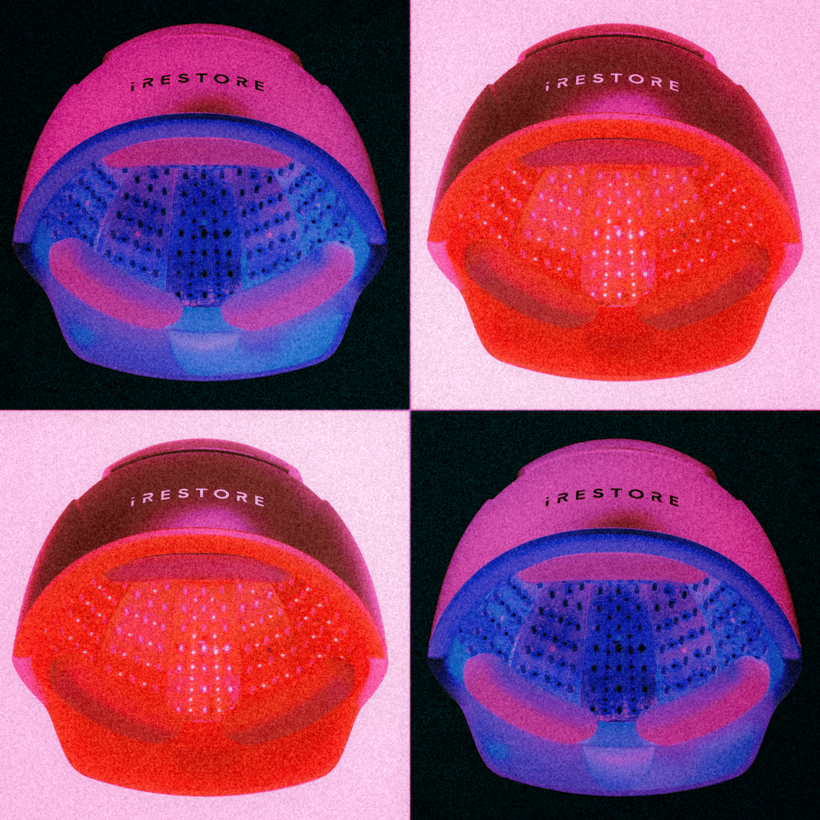

For 15 minutes every day while her husband watches sports, a friend steps into her walk-in closet and pops on an L.E.D. cap. Fortunately for both of them, there are lots of sports. He knows nothing about her clandestine meetings with a constellation of L.E.D. lights, and she knows nothing about R.B.I.’s or birdies or whatever ball is going into whatever net—and that’s exactly the way each of them likes it. It sounds very trad wife, except for the technology. Meanwhile, I wear my iRestore Elite helmet whenever the urge strikes, regardless of who’s wandering in and out of the room, romantic consequences be damned. Needless to say, I’m unmarried.
For most people, other than my friend, hair loss has come out of the closet. It used to be a source of great shame and private angst. Now everyone’s talking about it, and no one’s letting nature take its unkind course. The global market for hair-loss treatments—shampoos, supplements, serums, devices, and prescription remedies—is $8.6 billion, according to Evolvance Market Research. That doesn’t include the booming business in hair restoration—meaning hair-transplant surgery—which has reached $9.9 billion so far in 2026.