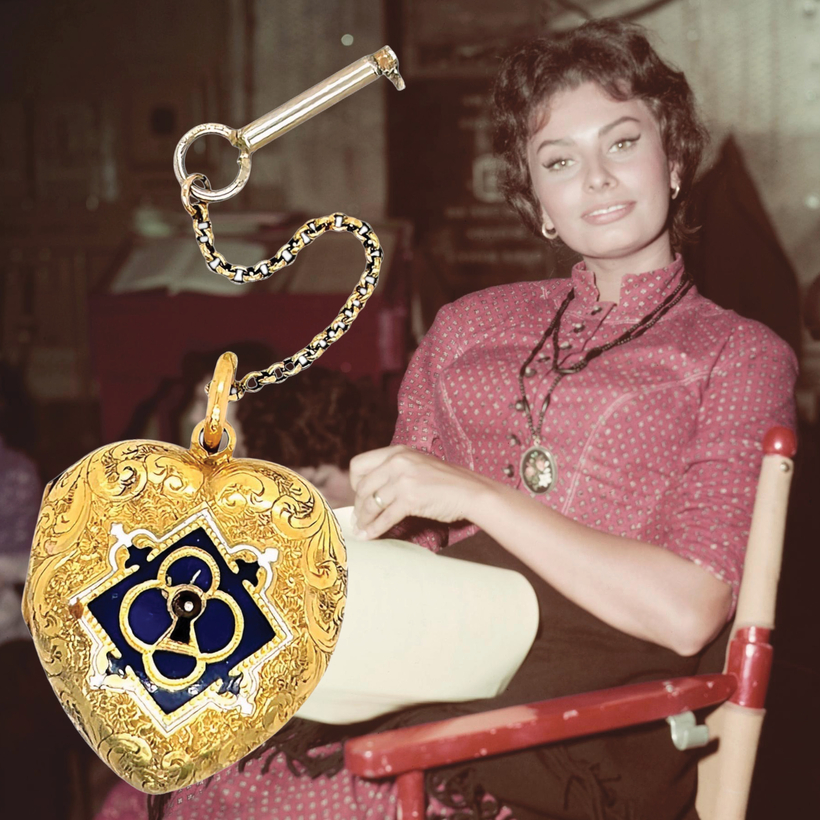

Lockets only seem old. In her day and from the great beyond, Queen Victoria has always been a trendsetter. When she wore black, so did everyone else (they still do). When she got Dash, the floppy-eared Cavalier King Charles spaniel became the “It” dog of 19th-century England, often commemorated in reverse crystal or micromosaic brooches. And when the indisputable dowager of mourning all but declared grief a national pastime, lockets gained populist appeal. Everyone, it seems, wanted to remember someone in a special locket. It has been ever thus.
People like to say, “The brooch is back.” Maybe. But there is no doubt that the locket is back, and it’s hot, hot, hot! For one thing, lockets are all-purpose vessels of sentiment. You can’t wear your heart on your sleeve, but you can sure wear it on a chain. Given today’s fashion of layering chains, lockets add distinction. They also add mystery. You never know what’s on the inside—and that’s exactly the point. Secrecy, you could say, is the lingua franca of the locket. As Sophie Jackson, director of Symbolic & Chase, one of London’s most esteemed estate dealers, says, “Some jewelry is destined for onlookers and some exclusively for our own pleasure. The joy of a locket is that it can be both. The outside is there to be admired by all, but there is the secret within, the personal memento that is too dear to share with the world.”