The pursuit of beauty has acquired a frenzied, can-you-top-this tenor. Critics used to wring their hands when Botox was new, complaining that it turned devotees into expressionless statues, bots. That sounds almost quaint now. I mean, look where we are. People who haven’t seen their first gray hair are booking deep-plane facelifts and calling it “preventive medicine.” Every other person you meet seems to be injecting peptides—unapproved and unregulated from China—in hopes of building muscle mass, eliminating brain fog, increasing immunity, and gaining energy. So much for fear of needles. So much for fear of unregulated drugs from China.

I’ve reported on all of these phenomena. And at one point in the process, I actually stopped to consider taking the plunge. Plunges. How bad could those unapproved Chinese peptides be? Recovering from a facelift looks kind of relaxing, like a spa vacation with painkillers. And then it occurred to me that I’d lost my mind.

My contacts file is populated with multiple doctors’ names that friends and I share over dinner. Between bites of crispy sushi, we weigh each possibility. This one is supposed to have delicate hands. That one’s sutures are a work of art. This one is the next Steven Levine. And we all know who Dr. Levine is: Kris Jenner’s surgeon, whose facelift now comes with a $300,000-to-$500,000 price tag. Friends who had consultations with Dr. Levine himself gave me these numbers. They scheduled surgeries. Then they canceled. Then they booked again, cycling through hope and worry, acceptance and doubt.

Are we vain, superficial, afraid, wise, delusional? Are we aging gracefully or gracelessly? Depends on the day; depends on the hour.

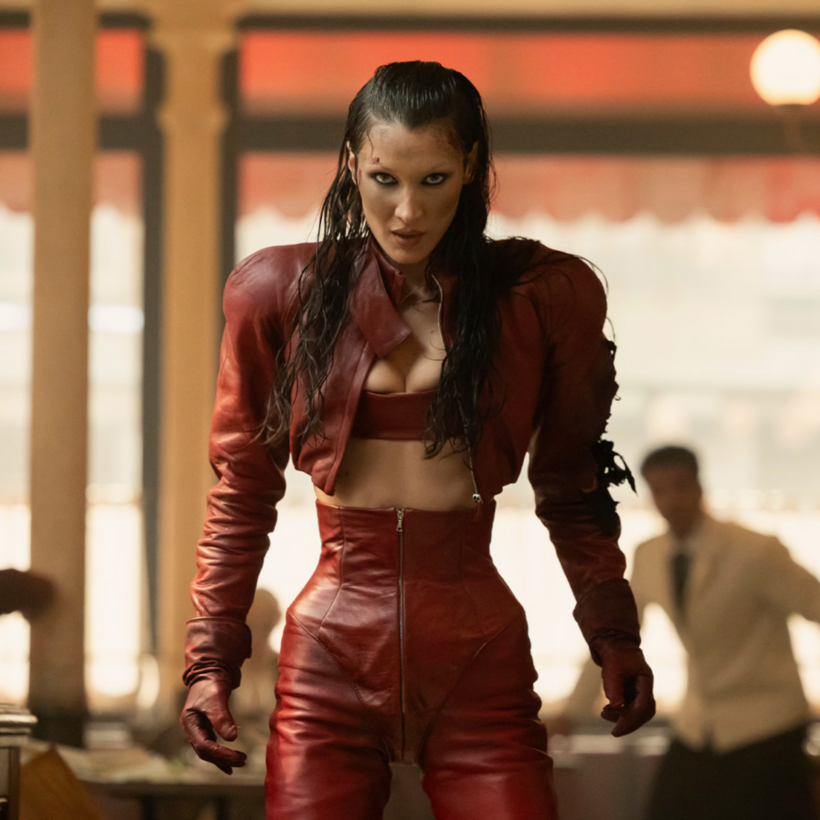
It’s nuanced. Unless you’re in Ryan Murphy’s new FX series, The Beauty, and then it’s blithely nuance-free. The Beauty is ugly, a body-horror dystopian nightmare about an injectable substance (like the substance of The Substance) that renders everyone pert and perky, with pillowy lips, poreless skin, six-pack abs, a bubble butt you could bounce a quarter off, and glossy, glorious hair. The characters have lots of sex, all of it joyless. The only moment of happiness occurs in the split second when they gaze at their transformed selves in a full-length mirror. They’re giddy, awed—and then the misery begins.

The mad scientist in the show—a two-time Nobel Prize winner, no less—concocts a magical compound that he names the Beauty™. He says it “rebuilds your DNA, cell by cell,” to “release the most perfect version of your physical self.” Sounds a lot like those peptides from China. The show’s tagline: “One shot makes you hot.”

Ozempic is name-checked. So are Eli Lilly, Novo Nordisk, GQ, Bruce Weber, Balenciaga, Mark Zuckerberg, and Jeff and Lauren. Also, the Sacklers.

Ashton Kutcher plays the billionaire who’s bringing the injection to market and counting his crypto along the way. As he hones his sales pitch, he sounds like a biohacking bro from the present or a snake-oil salesman of old. “No more limits, no more weakness, no more illness, no more sickness, no more ugly.”

If you secretly wish that pretty people were hollow or cruel or bad at math, then this show is for you. It punishes the beautiful, especially those who pursue perfection at all costs. Turning the fairy tale on its head, the good but ugly ducklings don’t transform into good but lovely swans. They become even more craven. As the ultimate comeuppance, the Beauty mutates into an S.T.D. with side effects that resemble those of H.I.V. crossed with Ebola mixed with Covid-19.

The only bright spot is Isabella Rossellini, the show’s conscience, playing Kutcher’s disenchanted wife. The revered beauty, who was the face of Lancôme in real life before executives decided that, at 42, she was too old for the job (they re-hired her when she was 63), spends much of the show trying to talk sense into her loathsome husband. At one point, demonstrating her thorough disregard for beauty, she sets a Caravaggio (Judith Beheading Holofernes) in the dining room on fire. One shot makes you hot.

Her speeches are the ones that ring true, especially given her personal history of rejecting the common anti-aging interventions. Her character declares, “I spent all my life chasing beauty, perfection, diet, trainer, needle, scalpel, elixirs, cleansers. I thought it would help me feel good, healthy, and happy and content. That it would help me find a mate, that it would help me build a life I wanted, the life I deserve. And then one day, you wake up, and you realize that you are the dog that caught the car. And your dream life is actually my golden prison. Maybe it’s time to burn it all down.”

There are moments of humor, much of it dark. An F.B.I. agent sounds an alert: “An editor from Vogue combusted in the Condé Nast cafeteria.” The agents rush to the scene, which was filmed, unfortunately, in the Hearst Tower in New York. I say “unfortunately” because the actual Condé café—what employees called it back in the 2000s, when the company occupied the building at 4 Times Square—was the ideal setting for this mayhem. It was designed by Frank Gehry with outer walls made of undulating reflective blue titanium, carefully arranged to make everyone look tall and thin. Another fun fact: the original plywood floors had to be replaced with linoleum when the editors’ high heels, mine included, pitted them mercilessly. Doesn’t that sound like something right out of a Ryan Murphy show?

Murphy has long explored human vanity and the enticement of chasing beauty. He gleefully mined the grotesquery of actually acting on that urge, starting in 2003 with Nip/Tuck, the FX series about two cosmetic surgeons who begin each consultation by asking the patient, “Tell me what you don’t like about yourself.” Where to begin? Each season, the show became increasingly more lurid.

The Beauty takes it further. The horror of the show is the human body and its fluids and secretions. Each transformation from average to Aphrodite or Adonis is set to the sound of cracking bones and squishing goo. Rossellini, playing a one-man Greek chorus, tells her mogul husband, “I’ll leave time in my schedule to visit you and your friends at the Hague.”

Murphy’s brutish vision is muddled, but so are our attitudes about beauty. Sure, we want it. And we’ll take certain measures, within reason, to enhance it. But what’s reasonable? What’s enhancement? In The Beauty, the trope “You, only better” is a farce; the transformed gods and goddesses look nothing like their former selves. They’re as interchangeable as the models on a Paris runway.

As the stigma of taking GLP-1s and undergoing cosmetic surgery starts to lift, the issue becomes more complicated. If you watch The Beauty as a warning, be prepared: It’s a hot mess.

The Beauty is available for streaming on Hulu and FX, with new episodes releasing weekly through March 4

Linda Wells is the Editor of AIR MAIL LOOK