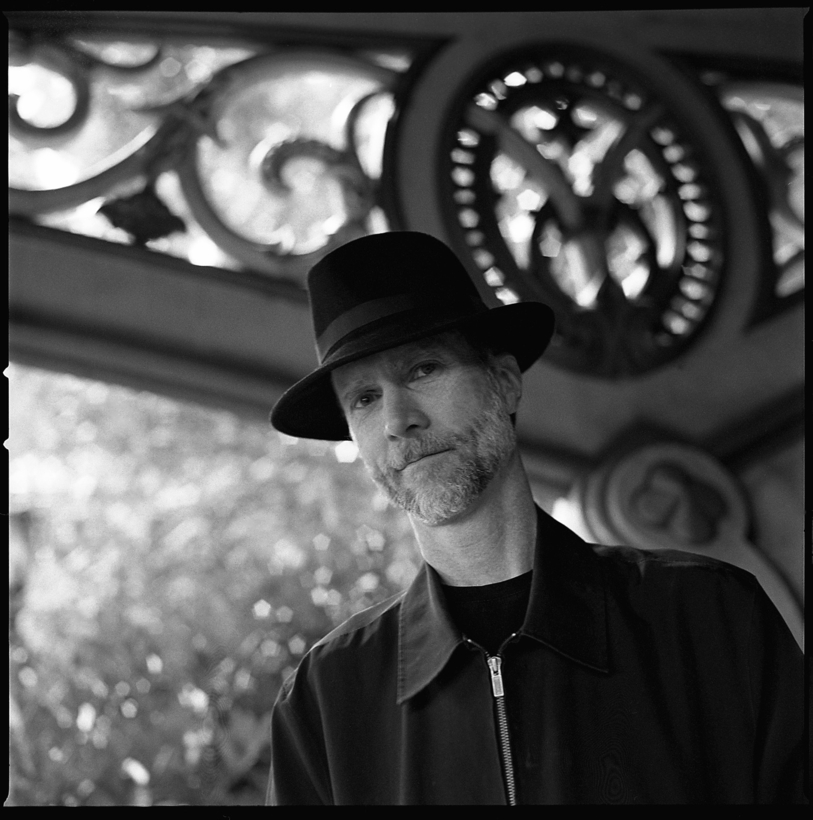
A half century ago, fired up by Save-the Arctic-Wilderness literature and Glenn Gould’s metaphysical documentary The Idea of North, an aspiring composer named John Luther Adams flew to Juneau, went hiking on the Mendenhall Glacier, and caught the sound of meltwater deep in a crevasse, tinkling like glass wind chimes in a gentle breeze. “Such a delicate sound for such an immensity of ice!,” he wrote almost a lifetime later in his crystalline memoir Silences So Deep: Music, Solitude, Alaska (2020). “In that moment of epiphany, I knew that something fundamental had changed.”
For the next four decades, Adams made his home in the wilderness outside Fairbanks, trying for a while to juggle composing and a day job as an environmental activist. But others, he eventually decided, could fight the losing battles. No one else could write his music. That mattered.
Inspired by the space, stillness, and elemental forces of Alaska, Adams went on to compose a prodigious catalogue of works miniature and mammoth, acoustic and electronic, indoor and outdoor, in any number of genres, scored for musical forces conventional and hugely exotic. Yet by his own admission he remains, at 73, the eternal outsider.

“Although I still compose music for symphony orchestra, for string quartet, and other media of the European ‘classical’ tradition,” he writes in “Goodbye, Schubert,” a recent essay, “I don’t see myself as part of that tradition.”
Neither, though, has he straitjacketed himself in some self-perpetuating ism or sound world. The early songbirdsongs, for a quintet of two piccolos and three percussion, flies by in lacy, airy flashes. His mature symphonic frescoes Become River, Become Ocean, and Become Desert seem less to flow through time than to solidify time into immersive space. Maybe what holds his world together is simply his unending quest to reveal through sound what he can express in no other medium. “Music is as close to religion as I get,” Adams wrote me in a recent email exchange. “And the practice of my music is the practice of my faith.”
When the Seattle Symphony premiered Become Ocean, in 2013, Alex Ross of The New Yorker pronounced it “the loveliest apocalypse in musical history.” A Pulitzer Prize followed in 2014. So did the work’s New York premiere, marking the composer’s first visit to Carnegie Hall. Before Become Ocean, just two of his scores had ever resounded in that hallowed space. With the world premiere of a diptych called Horizon, on April 22, the number of performances of his music climbs to six. By way of comparison, the running total right now for the post-minimalist icon John (Nixon In China) Adams, who is five years his senior and no relation, stands at 99.

Horizon is played by the 17 solo strings of the elite Australian Chamber Orchestra, which commissioned the work. Its two parts, Adams says, are formally identical and of equal duration but distinct in atmosphere, “one darker and more turbulent, the other brighter and calmer.” Though the ACO has performed the two halves separately before, New Yorkers will be the first to hear them in tandem, back-to-back.
This would be the moment to remind those who still think of Adams as Alaska’s composer laureate that he pulled up stakes there 12 years ago, dismayed by the cascading effects of drilling and climate change. But even before that, musical colleagues who knew him best told him to stop thinking of himself as an Alaskan composer. “Your music,” one told him, “is its own landscape now.” Today Adams and his wife Cynthia make their home in the heart of Australia’s legendary Red Centre.
“As you can imagine, it hasn’t been easy moving from one end of the earth to the other,” Adams writes, “especially in my seventies. We’ve settled on the outskirts of Mpartnwe/Alice Springs, where there’s a certain rough-and-tumble quality to life that we like. Some of our neighbors speak languages that have been here for tens of thousands of years. Our joke is that this is the Fairbanks of Australia. When I look at the night sky to locate myself, instead of the Big Dipper, I have the Southern Cross. Across that sprawling distance between here and there, I sense the connection. And I feel at home.”
On tour in North America from April 16 to 29, the Australian Chamber Orchestra will premiere the full-length Horizon (consisting of “Visible Horizon” and “True Horizon”) at Carnegie Hall, in New York, on April 22
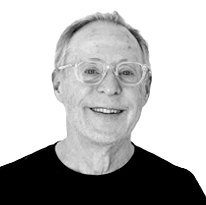
Matthew Gurewitsch writes about opera and classical music for AIR MAIL. He lives in Hawaii