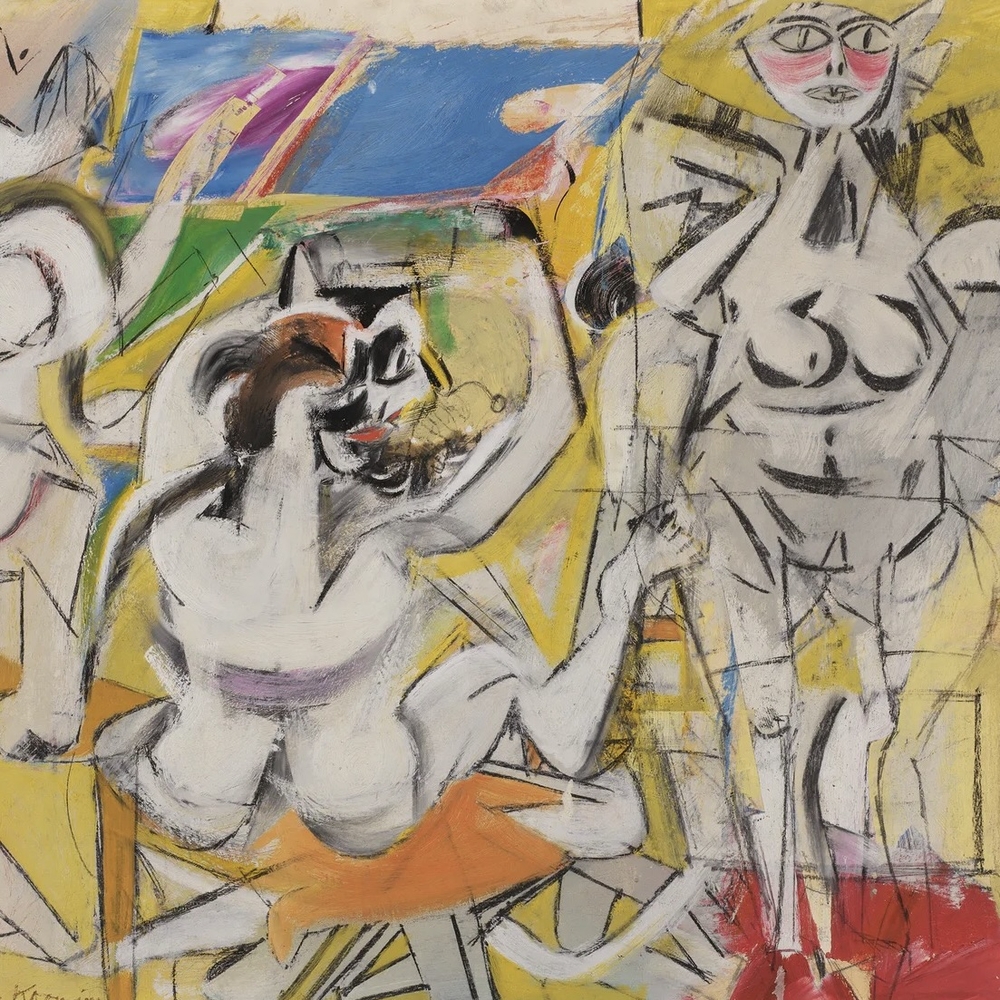
Willem de Kooning (1904–1997) left Rotterdam at age 22, a stowaway. He had no papers and spoke one word of English. Over the next seven decades, de Kooning became one of the most important painters of the 20th century. “I have to change to stay the same” was a favorite saying of his. Not surprisingly, his art never stood still. The Rijksmuseum, in collaboration with the Art Institute of Chicago, is now presenting the first comprehensive survey of de Kooning’s drawings shown in the Netherlands. More than 120 works, from student sketches to rapid charcoal studies, include the paintings that made his reputation—Excavation (1950), Pink Angels (c. 1945), Woman I (1950–52), and Woman and Bicycle (1952–53). For de Kooning, drawing was never preparatory; it was the work itself, a way of thinking through the hand. —Elena Clavarino