Time to run some numbers on the Wiener Werkstatte. The multidisciplinary collective that gave Vienna a glorious house style for nearly three turbulent decades is generally commemorated as a high-minded effort by three men who united, in 1903, the fine and decorative arts into an uplifting commercial proposition. But wouldn’t you know it, architect Josef Hoffmann, artist Koloman Moser, and the art-collecting industrialist Fritz Waerndorfer had in their employ or counted as patrons some 200 women. Moreover, as the new show “Modernity and Opulence: Women of the Wiener Werkstatte” makes clear, nearly a quarter of those women were Jewish by faith, descent, or family background. Opening at the Jewish Museum on July 17, in cooperation with the Museum of Applied Arts (MAK) in Vienna, the exhibition gathers more than 200 objects across fashion, ceramics, textile arts, graphic design, furniture, even stationery, and shares recent scholarship on the meaning of such contributions and the role of women in Freud’s hometown, or better yet, Adele Bloch-Bauer’s home turf. As subject, saloniste, and style icon, Klimt’s “Woman in Gold,” represented here in a drawing from the museum’s collection, is Wiener Werkstatte through and through. —Celia McGee
Arts Intel Report
Modernity and Opulence: Women of the Wiener Werkstätte
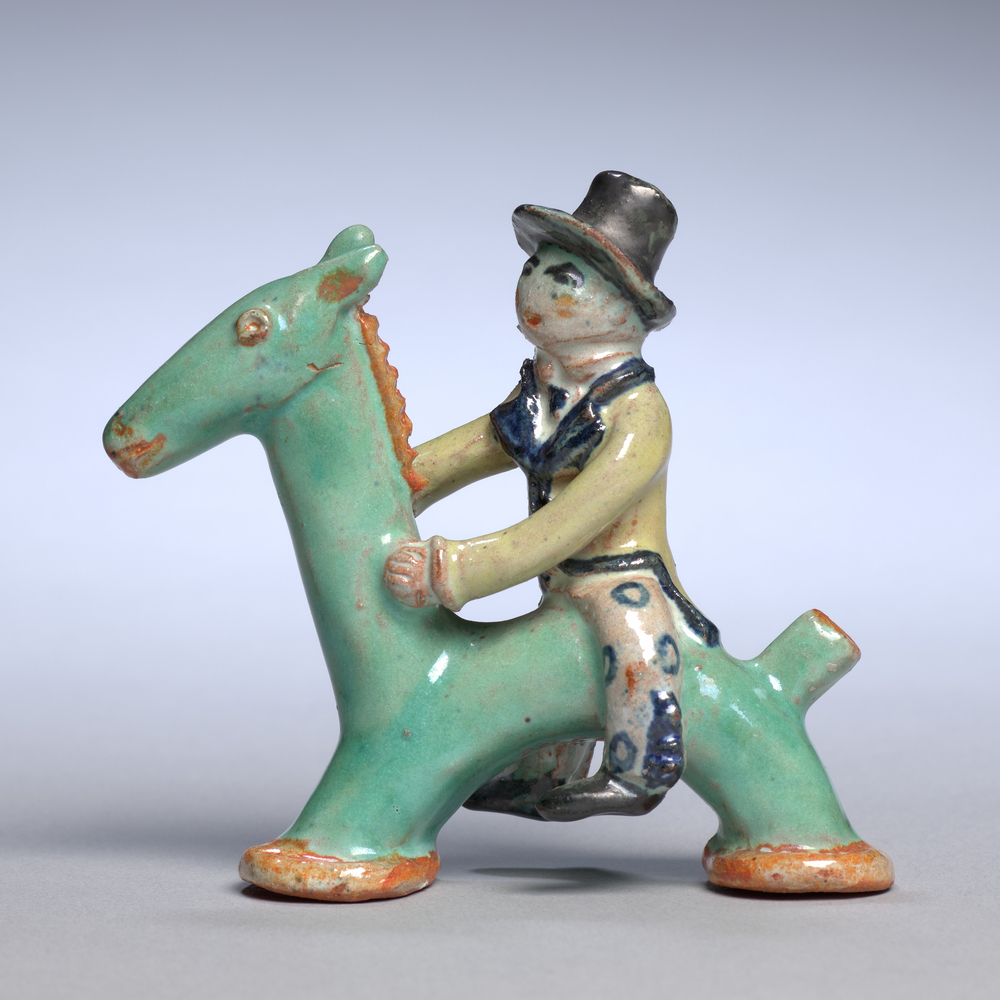
Kitty Rix, Boyona Horse, c. 1920s.