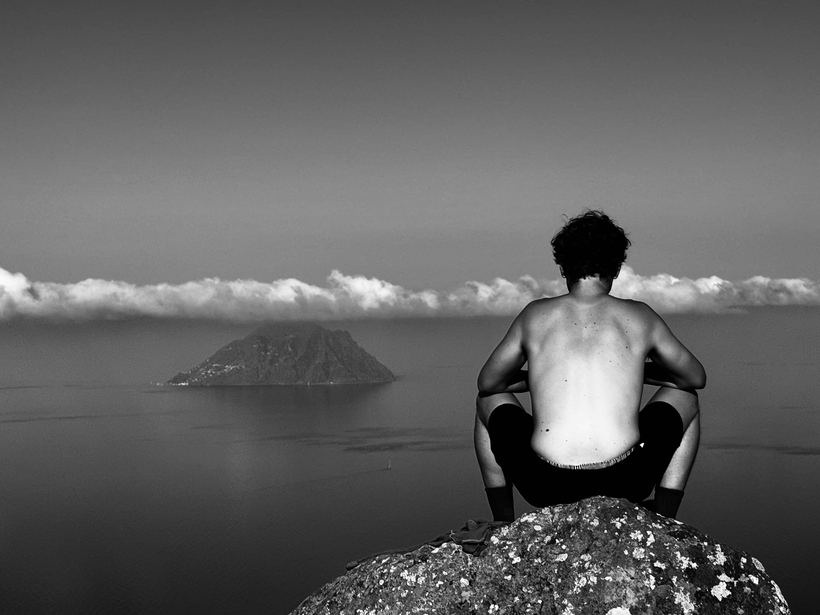

Maurizio Cattelan, the art world’s most celebrated provocateur—and the man behind the Art Basel duct-taped banana—first visited Filicudi 30 years ago, when the remote island still relied on donkeys for transport and had neither running water nor electricity. He now spends much of each summer at his house there—with no Internet connection, no television, and few modern distractions—hopping between islands, eating well, and catching up with old friends.
Filicudi, the second smallest of the Aeolian Islands—floating in the deep sea just north of Sicily—refuses easy arrivals. That’s one of its best qualities. There are different ways to get there, whether from Milazzo, in Sicily, Reggio Calabria, or Naples. I love taking the overnight Tirrenia ferry from Naples, after stopping to see Caravaggio’s The Seven Works of Mercy in the Pio Monte della Misericordia church. By sunrise, I’m on the upper deck. Under the sky’s orange glare, the Aeolians slowly emerge from the sea: first Stromboli, then Salina, Filicudi, and so on. It happens every morning, yet it never fails to feel epic. By the time you arrive, you’ve already left your everyday life behind.
