At Paula Cooper Gallery in Chelsea, birdsong and the smell of damp earth reach visitors before Meg Webster’s Thicket does. The sound is a recording of a New Jersey forest. The scent comes from the work itself: a massive room-sized spiral of branches, leaves, berries, and flowering plants. Visitors may enter Thicket, but the inward passage begins to narrow, pressing them to consider their place in the natural world. For more than four decades, Webster has pushed against the often industrial language of Minimalism, trading steel and concrete for moss, beeswax, soil, and salt. Thicket is temporary, like much of her work. Branches will be replaced throughout the run of the exhibition, and when it closes, the materials will be returned or recycled. Sculpture, as Webster sees it, moves through the same cycles as nature: growth, decay, renewal. Alongside Thicket, the artist shows new drawings made by rubbing spices, powdered vegetables, and flowers directly onto paper. The surfaces are monochrome, and they hold the color, texture, and scent of what made them. Webster asks the viewer not only to look at nature but to inhabit it. —Clara Scholl
Arts Intel Report
Meg Webster: Thicket
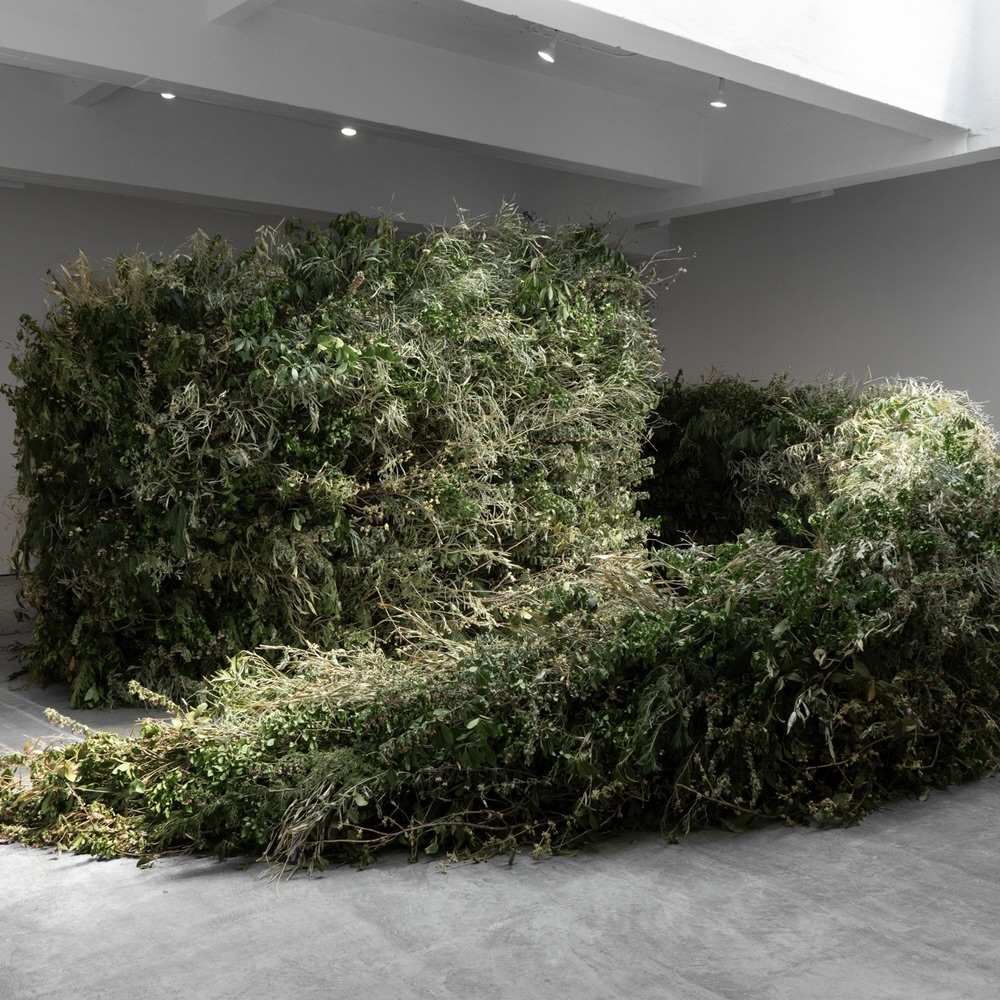
Installation view of Meg Webster: Thicket, Paula Cooper Gallery